BPC-157 (Body Protection Compound) is a 15-amino-acid peptide with high sensitivity to both light and temperature. Research consistently shows that UV and visible light exposure significantly accelerates degradation of reconstituted BPC-157 in aqueous solution. For a compound used in 250–500mcg daily doses with a typical protocol spanning 4–12 weeks, protecting your vials from light isn’t optional — it’s the most important storage variable after temperature.
Here are the 10 storage cases and containers most commonly used for BPC-157, ranked worst to best.
#10 — Worst: Clear Glass or Plastic Container (No Light Blocking)
Any transparent container — clear Tupperware, a glass jar, a see-through pill organizer — provides zero light protection for BPC-157. Every fridge door opening delivers a direct light exposure to your reconstituted vials. For a compound this light-sensitive, a transparent container is functionally the same as no container at all when it comes to light degradation.
#9 — Ziploc Bag (Even Opaque)
An opaque (dark-colored) Ziploc bag does block some light — which is why it ranks above a clear container. But Ziploc bags offer zero structural protection for glass vials. BPC-157 is often run in small 3ml vials that are more fragile than 10ml vials. Inside a Ziploc, those 3ml vials shift, roll, and make contact with each other on every fridge movement. Glass-on-glass contact is how chips and cracks happen.
#8 — Aluminum Foil Wrapping
Foil wrapping completely blocks light — which is actually its one legitimate advantage for BPC-157 storage. Pharmaceutical foil-backed blister packs exist for exactly this reason. The practical problem: foil tears with repeated handling, vials have to be unwrapped and re-wrapped daily for dosing, there’s no organization (which of these foil lumps is my reconstituted BPC-157?), and it looks like a fridge experiment. Effective for light blocking; impractical for a daily dosing protocol.
#7 — Dark Amber Glass Jar
A sealed amber glass jar blocks UV and a portion of the visible spectrum — it’s why pharmaceutical manufacturers use amber vials for light-sensitive compounds. The problem is partial protection: amber glass significantly attenuates UV, but visible light in the 400–700nm range still gets through. For BPC-157, which degrades under both UV and visible light exposure, amber glass alone is insufficient as the primary container. It’s a good secondary layer inside an opaque outer case, not a standalone solution.
#6 — Vendor Shipping Box (Foam Insert)
Your BPC-157 arrived in it, it fits perfectly, and it blocks all light. For the first week to ten days, this is a legitimate solution. The moisture degradation problem applies here: cardboard in a refrigerator absorbs humidity and becomes unreliable by week two. If your BPC-157 protocol runs longer than two weeks — and it almost certainly does — you need a more durable solution before the cardboard fails.
Pro Tip: BPC-157’s light sensitivity is highest for the aqueous (reconstituted) form. Lyophilized powder is considerably more stable. If you can source BPC-157 as powder and reconstitute fresh every 2–3 weeks, you reduce accumulated light exposure risk. For daily injectors, this means keeping unreconstituted vials in long-term frozen storage and only pulling one vial at a time.
#5 — Opaque Pill/Medication Organizer
Opaque pill organizers with multiple compartments are a functional short-term solution for 3ml vials. They block light, provide some organization, and are compact. The limitations for BPC-157 specifically: pill compartments are rarely sized precisely for 3ml peptide vials, so vials sit loose in oversized cells. No foam padding means the vials can tip or rattle. Adequate for a week-to-week protocol; not ideal for a serious multi-month run.
#4 — Opaque Hard-Shell Box (Generic)
A solid improvement: latching hard shell, full light blocking, and a rigid structure that won’t compress. Vials don’t escape the container, and the box is immune to fridge humidity. The missing elements are foam padding (vials still shift inside) and organized compartments (no dedicated space for BAC water, syringes, or swabs for a daily injection protocol). A good general-purpose solution for someone not ready to invest in a purpose-built case.
#3 — Small Pelican-Style Case (No Foam)
Hard-shell, waterproof, fully opaque, and durable enough to travel. The standard Pelican case without foam customization is a significant step up from a generic box — the construction quality is higher, the seal is tighter, and it handles drops better. Without foam inserts, BPC-157 vials still shift during transport and fridge movement. Good enough for most home storage; needs foam for serious travel.
#2 — Pelican-Style Case with Custom Foam
Add properly cut foam to a Pelican-style case and you have outstanding BPC-157 storage: vials fully immobilized in individual slots, total light blocking, impact resistance, and a tight seal. The only thing separating this from #1 is the effort required to get the foam right and the lack of integrated organization for the rest of a daily injection protocol.
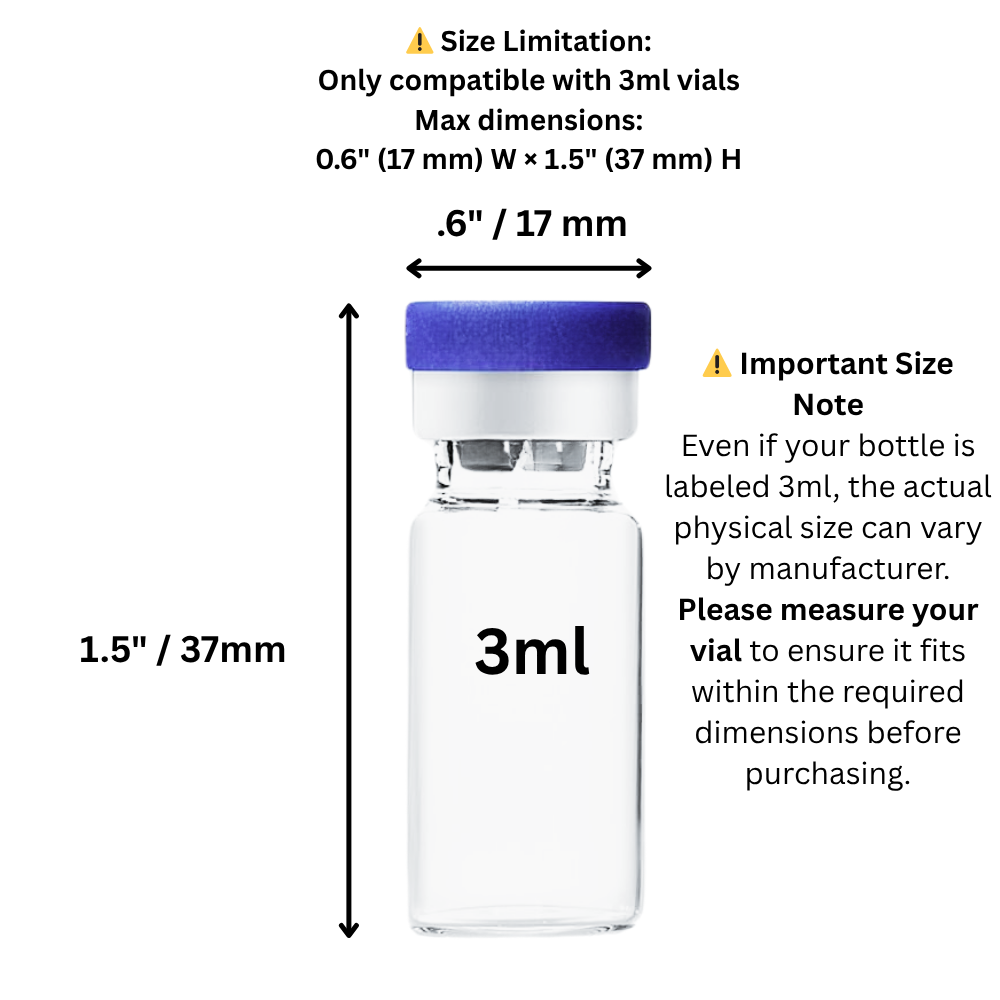
#1 — Best: VialCase Dedicated Peptide Case
Purpose-built for 3ml and 10ml peptide vials — both common formats for BPC-157. Precision foam slots hold each vial without any movement. The fully opaque hard shell blocks 100% of light. For a daily BPC-157 protocol, the integrated syringe compartment and BAC water slot mean your entire injection kit lives in one organized, protected case. Pull the case out, draw your dose, put it back. Every time.
BPC-157’s potency degradation from light exposure is real and measurable. The case is the most impactful variable you can control after temperature. Shop BPC-157 cases at VialCase →
Pro Tip: If you’re running BPC-157 alongside TB-500 (the Wolverine Stack), use a case with at least 4 vial slots: one active BPC-157, one active TB-500, one backup of each. Label each slot. Running out of a compound mid-protocol because you forgot to reorder is more disruptive to results than most storage variables.
BPC-157 Light Sensitivity: What the Research Shows
BPC-157 contains a pentadecapeptide sequence that undergoes photo-oxidation under UV and visible light exposure. Studies on the stability of aqueous peptide solutions consistently show that light-sensitive peptides stored in transparent containers degrade significantly faster than those in opaque storage. For a compound where potency directly determines therapeutic effect, minimizing light exposure throughout the storage period — not just during dosing — is critical.
Frequently Asked Questions
Does BPC-157 need amber vials specifically?
Amber vials help but are not sufficient on their own. Amber glass filters UV wavelengths but transmits visible light. The most protective setup is amber vials inside an opaque hard-shell case — the amber handles UV that might reach the vial if the case is briefly opened, while the opaque case handles the cumulative visible light from repeated fridge door openings.
How long does reconstituted BPC-157 last?
With bacteriostatic water in proper light-blocking, refrigerated storage: 4–6 weeks at 2–8°C. With sterile water: 5–7 days. BPC-157 stored in clear containers with regular light exposure may degrade faster than these benchmarks. See our BPC-157 storage guide for complete protocols.
Can I stack BPC-157 and TB-500 in the same case?
Yes — this is one of the most common stacking protocols. A case with multiple labeled vial slots handles both compounds cleanly. The storage requirements are identical: 2–8°C refrigeration, complete light blocking, no freezing of reconstituted solution. See our Wolverine Stack storage guide for the full protocol.