Why Simple Works Better Than Complex
There's a paradox in the peptide community: the people who build the most elaborate storage systems often end up making the most costly mistakes. They have a spreadsheet for tracking vial inventory, a dedicated mini-fridge with a thermometer, and a laminated protocol chart — and then they reconstitute a new vial without checking the date on the one in the back of the fridge. Complexity creates cognitive load. Cognitive load leads to shortcuts. Shortcuts lead to degraded peptides.
The research on habit formation is clear: simpler routines have higher adherence rates. A storage system you follow 100% of the time protects your compounds far better than a theoretically perfect system you follow 70% of the time. When your storage protocol requires fewer decisions, you make fewer errors.
The goal of this guide is to get you to a system that takes under 5 minutes to set up and under 30 seconds to maintain each day. That is achievable — and it delivers results that match or exceed overcomplicated setups.
Key Insight: Peptide degradation is cumulative. Every time your compound sits at the wrong temperature, absorbs excess light, or gets contaminated by a non-sterile draw, it loses potency you cannot recover. Consistency prevents degradation far more effectively than any single heroic storage measure.
The 3 Things Your Storage System Must Do
Before we get into the physical setup, it helps to understand what you're actually protecting against. Peptides and GLP-1 compounds degrade through three primary mechanisms, and your storage system needs to address all three:
- Heat degradation: Peptide bonds break down faster at higher temperatures. Most reconstituted peptides and GLP-1s need to stay between 2°C and 8°C (36°F–46°F). Lyophilized (freeze-dried) peptides have more flexibility — they can often tolerate brief room-temperature exposure — but reconstituted compounds have no such buffer. Every minute above 8°C accelerates degradation.
- Light degradation (photodegradation): UV and visible light oxidize amino acid residues, particularly those with aromatic rings or sulfur-containing side chains. Semaglutide, tirzepatide, BPC-157, and GHK-Cu are all notably photosensitive. Your storage system needs to shield vials from ambient light, not just direct sunlight.
- Contamination: Each time you puncture the stopper of a reconstituted vial, you introduce potential contamination. The right reconstitution media (bacteriostatic water for most peptides) provides chemical protection, but your storage environment still needs to be clean and organized enough that you never accidentally draw from the wrong vial.
That's it. A storage system that controls temperature, blocks light, and prevents mix-ups is a complete storage system. Everything else is optional.
The 5-Minute Setup (What You Actually Need)
Here is the complete list of physical items you need for a functional peptide or GLP-1 storage setup:
- A dedicated spot in your fridge. Not the door shelf — the temperature fluctuates too much there with every opening. Choose a shelf in the main body of the fridge, toward the back where temperatures are most stable. A single consistent location means you always know where your vials are.
- A hard-shell vial case. This is the single most impactful upgrade you can make. A purpose-built peptide storage case solves the light problem entirely (opaque shell), solves the organization problem (labeled slots for each vial), and protects glass vials from the accidental impact of other items in the fridge. You don't need a mini-fridge, a temperature logger, or a UV-blocking refrigerator tray. You need a case.
- A fine-tip permanent marker and a roll of label tape. That's your entire labeling system. Label each vial the moment you reconstitute it — compound name, date reconstituted, concentration. This takes 20 seconds and prevents every mix-up.
- Bacteriostatic water for reconstitution. BAC water contains 0.9% benzyl alcohol, which acts as a preservative and extends reconstituted shelf life to 4–8 weeks versus 1–2 weeks for plain sterile water. This single choice doubles or quadruples your vial's useful life.
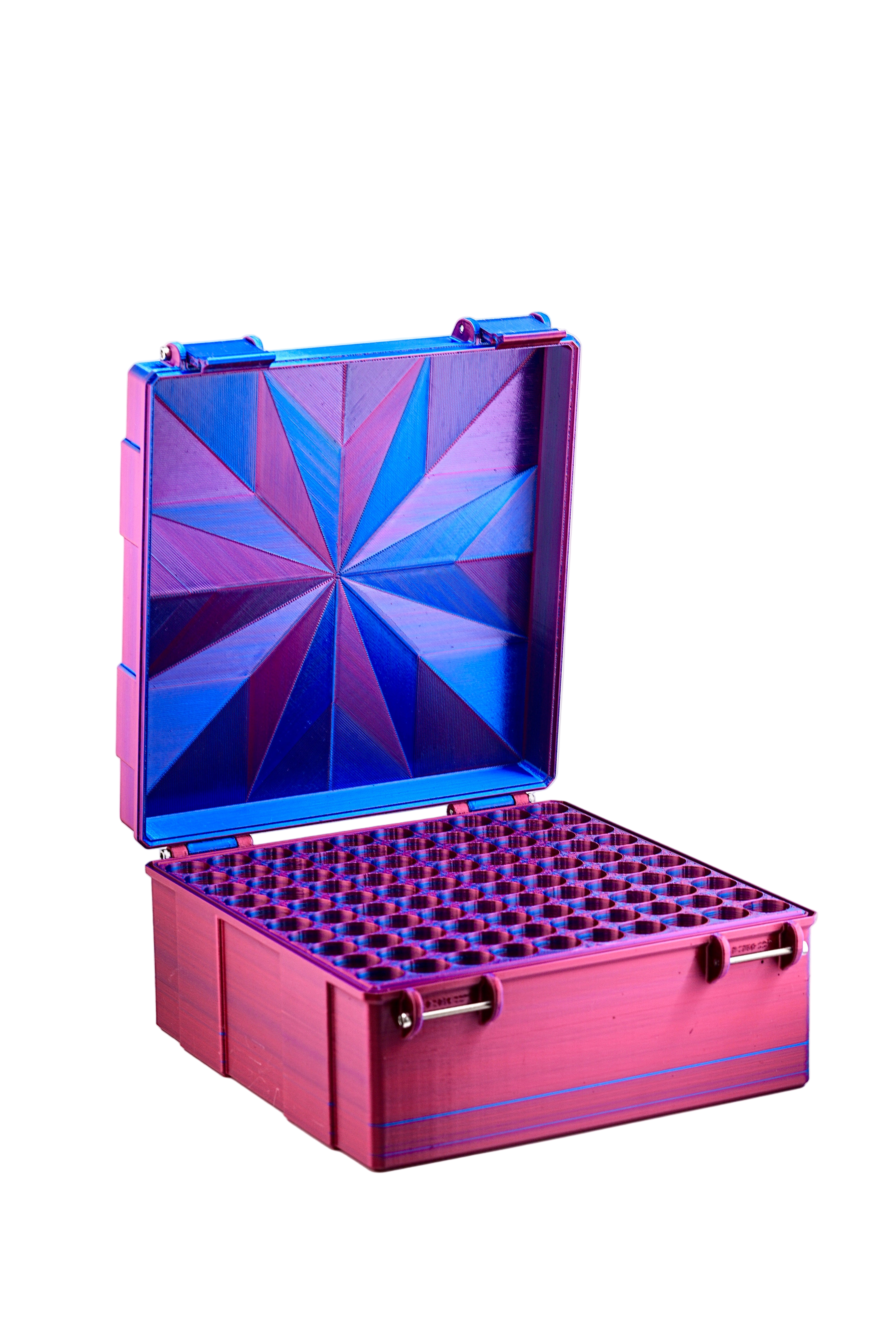
What You Don't Need: A dedicated mini-fridge (unless you're running 10+ vials simultaneously), a digital temperature logger, amber glass secondary containers, a vacuum sealer for lyophilized vials, or a protocol spreadsheet. These are nice additions if you have them, but they solve problems that a good case and consistent habits already handle.
Fridge Placement: One Decision That Changes Everything
The single most impactful placement decision is keeping your vials away from the refrigerator door. Door shelves can experience temperature swings of 5°C–8°C every time the door opens, which in an average household means 15–20 thermal excursions per day. Over a 6-week protocol, that's hundreds of temperature spikes. Each one accelerates degradation.
The back of a middle shelf is ideal. Most refrigerators maintain the most stable temperature in the center of the main compartment. The bottom of the fridge is usually the coldest zone — fine for some compounds but risks vials approaching the freezing point if your fridge runs cold. The very top shelf can be warmer due to heat stratification.
A few additional placement principles worth knowing:
- Keep vials away from the cooling vents. Direct airflow from vents creates localized cold spots that can approach freezing temperatures. Reconstituted peptides should never freeze — ice crystal formation physically shears peptide bonds.
- Keep vials away from fresh produce drawers. These compartments have higher humidity, which can compromise rubber stoppers over extended storage.
- Don't put GLP-1 vials next to strongly-scented foods. Rubber stoppers are semi-permeable. This is a minor concern for short protocols but matters for compounds stored 6+ weeks.
Once you've identified your ideal spot, put your case there and leave it there. That's the whole decision. For more detail on optimizing your fridge layout, the complete peptide fridge organization guide goes deeper on zone mapping and temperature data.
Labeling Without Overthinking It
The labeling system that prevents all costly mistakes requires exactly three pieces of information on each vial:
- Compound name (abbreviated is fine — "Sema" for semaglutide, "BPC" for BPC-157)
- Reconstitution date (the date you added BAC water, not the date you received it)
- Concentration (e.g., "2mg/mL" — critical for accurate dosing)
Write directly on a piece of label tape and wrap it around the vial. Do this the moment you finish reconstituting — before you cap the syringe, before you put the vial in the fridge, before you do anything else. The 20-second window where the vial is in your hand after reconstitution is when labeling happens. Every time.
For GLP-1 compounds like semaglutide or tirzepatide where you're drawing smaller weekly doses from a single vial over multiple weeks, add one more piece of information: the discard date (reconstitution date + 6 weeks for BAC water). Write it directly on the label. When you pull the vial from the fridge each week, glance at the discard date. That's your entire expiration tracking system.
Pro Tip: Use a label maker if you want cleaner results, but don't wait until you get one to start labeling. A marker and tape right now is infinitely better than a label maker next week. The labeling habit matters more than the labeling tool.
The Only Reconstitution Timing Rule You Need
There's significant debate in peptide communities about when to reconstitute — whether to reconstitute a full vial at once or to reconstitute only what you'll use in a short window. Here's the simplified answer that covers the vast majority of use cases:
Reconstitute one vial at a time. Use it within 4–6 weeks (with BAC water). Start the next vial only when the current one is finished or has reached its discard date.
This rule works because BAC water gives you a 4–6 week window for most peptides and GLP-1 compounds. That window is long enough to complete most protocols without needing to open a second vial. By reconstituting sequentially rather than all at once, you maximize the total shelf life of your supply.
The one exception is if your protocol requires multiple vials simultaneously — for example, a stack with BPC-157, a GH peptide, and a GLP-1. In that case, reconstitute each compound separately and label each vial clearly. Having three vials open simultaneously is fine; having three unlabeled vials is not.
For a detailed walkthrough of the reconstitution process itself — including BAC water ratios and syringe technique — the BAC water reconstitution guide covers every step.
What Happens When You Travel
The simplest travel approach is to treat your travel storage the same way you treat your home storage: same case, same rules, different location. Your hard-shell vial case protects your compounds in the fridge at home and in a hotel mini-fridge equally well. The case travels with you.
The specific rules for traveling with peptides:
- Always carry on, never check. Cargo holds experience temperature extremes that will damage reconstituted peptides. Checked luggage also risks rough handling that shatters glass vials. Your case goes in your carry-on or personal item.
- TSA and airport security. Vials and syringes are allowed in carry-on baggage. TSA may swab your case for explosive residue, which takes 60 seconds. Having everything organized in a professional case significantly reduces the chance of secondary inspection. For detailed rules, see the TSA peptide travel guide.
- Cold chain during transit. For flights under 2–3 hours, your vials will remain within safe temperature range without active cooling. For longer transit times, a small gel cold pack (not direct ice) in your case keeps temperatures appropriate. Wrap it in a cloth to prevent contact-freezing your vials.
- Hotel storage. Most hotel rooms have mini-fridges or can arrange a refrigerator. Request one when booking for multi-night stays. Your case goes in the mini-fridge just as it does at home.
When to Upgrade Your System
The simple system described here works for the majority of users. There are specific situations where an upgrade makes sense:
- Running 5+ vials simultaneously. A larger case with more slots is a direct upgrade — same principle, more capacity. Look for cases that accommodate both 3ml and 10ml vials if you're using BAC water in 10ml vials alongside peptides in smaller vials.
- Frequent travel. If you travel more than twice a month, a case with insulation built in or room for a slim cold pack is worth the upgrade. Consistency in travel storage is as important as consistency at home.
- Long-term storage of lyophilized vials. If you're stockpiling lyophilized powder for long-term use (common when buying in bulk from overseas), a dedicated freezer space and secondary moisture-barrier packaging extends shelf life to 18–24 months. This is the one scenario where the simple system needs a supplement.
- Clinical or multi-user settings. If more than one person is accessing the same vials, a clearly labeled system with individual slots becomes essential rather than optional. The organizational discipline that's easy to maintain for one person requires more structure when multiple people are involved.
For most home users on a standard protocol, the upgrade from the simple system to any more elaborate setup delivers diminishing returns. The system above, followed consistently, protects your compounds as well as setups that cost ten times more to implement.
FAQ
Can I store peptides in the door of my fridge?
No. Door shelves experience temperature fluctuations with every opening that exceed safe storage ranges for reconstituted peptides. Use an interior shelf in the main compartment.
Do I need a dedicated mini-fridge for peptides?
Not for most users. A standard household refrigerator with a good case and correct placement works well for 1–5 vials. A dedicated mini-fridge only becomes necessary if you're storing 10+ vials and need to avoid the temperature variation from frequent main-fridge openings.
How long does reconstituted semaglutide or tirzepatide last?
Compounded semaglutide and tirzepatide in BAC water typically remain viable for 4–6 weeks when refrigerated at 2°C–8°C and protected from light. Always follow the guidance from your prescribing provider, as compounding pharmacies may have specific instructions.
Can I freeze reconstituted peptides to extend shelf life?
No. Freezing reconstituted peptides causes ice crystal formation that physically damages the peptide structure. Only lyophilized (freeze-dried) powder should be frozen. Once reconstituted, refrigerate only.
What if my vial was left out of the fridge overnight?
The answer depends on the compound and the ambient temperature. Most reconstituted peptides begin significant degradation after 4–8 hours at room temperature (20°C–25°C). Shorter excursions in a cool environment may result in only minimal loss. When in doubt, check for visual changes (cloudiness, color change, unusual odor) and consult the peptide storage mistakes guide for degradation assessment.
Do I need to use amber vials?
Amber vials help by filtering some UV wavelengths, but they don't block all photodegradation — visible light still penetrates. A hard-shell opaque case provides complete light protection that amber vials alone cannot. An amber vial inside an opaque case is better than either alone.
Is it okay to store vials on their side?
Upright is preferred for reconstituted vials. Sideways storage keeps the liquid in contact with the rubber stopper, which slightly increases the risk of trace leaching and contamination over time. For lyophilized powder, orientation doesn't matter.
Disclaimer: This article is for informational and educational purposes only. It does not constitute medical advice, and the information provided should not be used as a substitute for professional medical guidance. Peptides and GLP-1 compounds are research chemicals or prescription medications subject to regulation. Always consult a licensed healthcare provider before beginning any peptide or injectable protocol. Proper storage practices described here are based on general biochemical principles and publicly available research literature.