Disclaimer: This article is for informational and educational purposes only. Retatrutide is not FDA-approved for human use. Consult a qualified healthcare provider before beginning any peptide protocol.
What You Need Before You Start
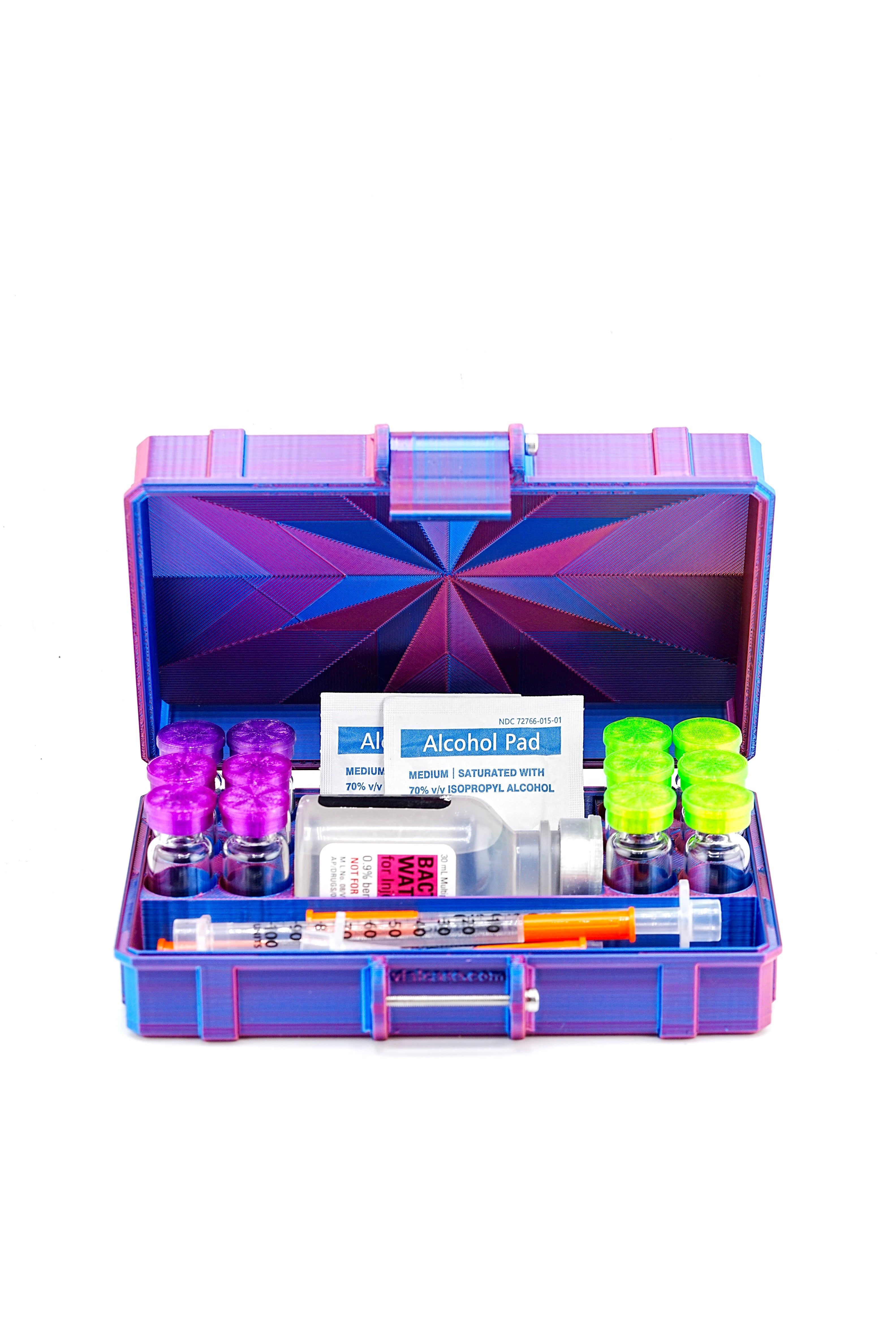
Reconstituting Retatrutide is a straightforward process, but doing it correctly requires having the right supplies ready. Cutting corners here — using tap water instead of bacteriostatic water, or pulling the plunger too aggressively — directly damages the peptide and wastes expensive compound. Gather everything before you open the vial.
- Retatrutide lyophilized powder vial — verify the vial is sealed, the lyocake (powder) is intact and white, and the rubber stopper is undamaged
- Bacteriostatic water (BAC water) — not sterile water, not tap water, not saline. BAC water contains 0.9% benzyl alcohol, which preserves the reconstituted peptide for weeks in the refrigerator. Sterile water has no preservative and should only be used if you plan to use the entire vial immediately.
- Insulin syringe or 1ml luer-lock syringe — for drawing and injecting BAC water. A standard 1ml syringe with a 27–29g needle works well.
- Alcohol prep pads — for wiping both rubber stoppers before piercing
- A clean, flat surface — ideally a counter you've wiped down with an alcohol pad
Before You Start: Let the Retatrutide vial come to room temperature for 15–20 minutes before reconstituting. Injecting cold BAC water into a cold lyophilized peptide increases the risk of protein denaturation. Room-temperature equilibration is a small step that meaningfully protects potency.
How Much BAC Water to Add: The Reconstitution Ratio
The volume of BAC water you add determines the concentration of your final solution, which directly dictates how much you draw for each dose. There is no single "correct" volume — the right amount depends on your target dose and your preferred injection volume. However, most Retatrutide protocols use concentrations that result in manageable injection volumes in the 0.05–0.5ml range per dose.
The most common Retatrutide vials are 5mg or 10mg. Here are the most practical reconstitution scenarios:
For a 5mg Retatrutide Vial
- Add 1ml BAC water → concentration = 5mg/ml (5,000mcg/ml). Each 0.1ml = 500mcg. Useful for higher doses (4mg+).
- Add 2ml BAC water → concentration = 2.5mg/ml (2,500mcg/ml). Each 0.1ml = 250mcg. Good for mid-range doses (1mg–4mg).
- Add 2.5ml BAC water → concentration = 2mg/ml (2,000mcg/ml). Each 0.1ml = 200mcg. Precise for low starting doses (0.5mg–2mg).
For a 10mg Retatrutide Vial
- Add 1ml BAC water → concentration = 10mg/ml. Each 0.1ml = 1,000mcg. Useful only for very high doses; injection volumes get very small and measuring errors matter more.
- Add 2ml BAC water → concentration = 5mg/ml. Each 0.1ml = 500mcg. Practical for 2mg–8mg protocols.
- Add 4ml BAC water → concentration = 2.5mg/ml. Each 0.1ml = 250mcg. Good for lower dose ranges with more forgiving measurement precision.
The practical rule: choose a concentration that puts your weekly dose in a 0.1ml–0.4ml injection volume. This range is comfortable for subcutaneous injection, and the volume is large enough that small measurement errors don't create significant dose variability. Verify your math with the GLP-1 Calculator's reconstitution tool before injecting.
Dose Calculation Example: You have a 10mg vial and want to dose 2mg (2,000mcg) weekly. You add 4ml BAC water (2.5mg/ml concentration). Your dose volume is 2mg ÷ 2.5mg/ml = 0.8ml per injection. That's manageable. If instead you added 2ml (5mg/ml), your dose volume would be 0.4ml — also fine. Either works; pick based on how many weeks you want one vial to last.
Step-by-Step Reconstitution Process
Step 1: Wipe Both Stoppers
Using a fresh alcohol prep pad, wipe the rubber stopper on the Retatrutide vial and on the BAC water vial. Let both air-dry for 30 seconds. Do not touch the cleaned surface after wiping. This step prevents introducing bacteria or contaminants into either vial.
Step 2: Draw the BAC Water
Pull back the plunger on your syringe to the volume you intend to add (e.g., 2ml). Insert the needle into the BAC water vial stopper at a slight angle. Inject the air into the vial, then invert the BAC water vial and slowly draw the desired volume of water. Remove the needle from the vial. There should be no bubbles — if there are, gently tap the syringe to move them to the top and push them out before proceeding.
Step 3: Add BAC Water to the Retatrutide Vial — Slowly, Against the Side
This is the most critical step. Insert the needle into the Retatrutide vial stopper and angle it so the BAC water runs down the inside wall of the vial rather than dripping directly onto the powder. Deliver the water slowly and gently. Never squirt it in forcefully or aim directly at the lyocake. Mechanical force from a direct stream can shear the peptide chains and permanently damage potency.
If you have more than 1ml to add and your syringe is 1ml, draw and add in multiple smaller volumes. The approach is the same each time: slow, angled delivery against the vial wall.
Step 4: Do Not Shake — Swirl Gently
Once the BAC water is in the vial, the lyophilized powder will begin dissolving on its own. Do not shake the vial. Shaking creates air bubbles and can cause protein aggregation — effectively denaturing the peptide at the foam interface. Instead, gently swirl or slowly roll the vial between your palms. If the powder doesn't fully dissolve with swirling, place the vial in the refrigerator for 10–15 minutes and then swirl again. The cold dissolving is slower but gentler.
Step 5: Inspect the Solution
Properly reconstituted Retatrutide should be a clear, colorless to very slightly yellowish liquid with no visible particles, cloudiness, or floating material. A very slight yellow tint is normal and not a quality concern — Retatrutide's peptide structure can produce this in solution. What you should not see:
- Visible white or colored particles floating in the solution
- Persistent cloudiness that doesn't clear with gentle swirling
- Gel-like consistency or viscous clumps
- Significant color (pink, brown, or orange tints indicate degradation or contamination)
If the solution looks cloudy or has particles after 30+ minutes of attempted dissolution, do not inject it. Discard and reconstitute a fresh vial if available. A poorly dissolved reconstitution usually indicates either a problem with the BAC water (wrong type, contaminated) or a damaged lyocake from improper storage.
Storage After Reconstitution: The Rules That Matter
Once reconstituted, Retatrutide is significantly more vulnerable than it was as lyophilized powder. The rules for storage change dramatically — and breaking them is the most common way people destroy peptide they've just spent time and money preparing.
Refrigerate Immediately
As soon as reconstitution is complete and you've drawn your first dose, the vial goes in the refrigerator. Target temperature: 2–8°C (36–46°F). This is standard pharmaceutical refrigerator range. A mini-fridge dedicated to peptides is ideal; the main door shelf of a household fridge experiences the most temperature variation each time the door opens. Keep vials in the body of the fridge, not the door shelf.
Shelf Life: 4–6 Weeks with BAC Water
With bacteriostatic water, reconstituted Retatrutide is generally stable for 4–6 weeks under proper refrigeration. The benzyl alcohol in BAC water prevents bacterial growth, but the peptide itself will slowly degrade over time even in sterile conditions. Most experienced users set a 4-week expiration date from reconstitution and discard any remaining solution after that point regardless of appearance. The cost of a degraded dose far exceeds the cost of a small amount of discarded peptide.
Protect from Light
Retatrutide in solution is more photosensitive than the lyophilized powder. Keep the vial in an opaque container or wrapped in foil if your storage case has transparent sections. Even refrigerator light (which cycles on and off with door opening) can contribute to photodegradation over weeks of repeated exposure. A purpose-built peptide storage case with opaque construction eliminates this variable entirely.
Never Freeze Reconstituted Retatrutide
Freezing reconstituted peptide causes ice crystal formation that physically damages the peptide structure. Freeze-thaw cycling is particularly destructive. If you need long-term storage, store the vial before reconstitution (lyophilized) at -20°C. Once reconstituted, refrigerate at 2–8°C and use within 4–6 weeks.
Label Your Vials: Write the reconstitution date and concentration on a small label and affix it to the vial. In a busy protocol with multiple compounds, this prevents the two most common errors: using expired peptide and drawing the wrong volume because you forgot the concentration. A labeled, organized storage case is the simplest protocol quality control system available.
Common Reconstitution Mistakes and How to Avoid Them
Using Sterile Water Instead of BAC Water
Sterile water contains no preservative. It is appropriate only if you plan to use the entire vial in a single session. For a weekly injection schedule, you'll be repeatedly piercing the stopper and drawing from the same vial over 4+ weeks. Without benzyl alcohol, bacterial contamination becomes a serious risk within days. Always use bacteriostatic water for multi-use vials.
Shaking the Vial
Already covered, but worth repeating: shaking creates foam, and foam destroys peptide. If you're used to shaking protein powder or insulin vials, retrain your instinct. Peptides require swirling only.
Adding Too Much BAC Water and Getting a Useless Concentration
Adding 10ml to a 5mg vial gives you 0.5mg/ml. Your 2mg dose is now 4ml — a very large subcutaneous injection volume that is uncomfortable and potentially problematic for absorption. Plan your concentration before you start. Write it down. The reconstitution decision is permanent once made.
Reconstituting Without Letting the Powder Warm to Room Temperature
Cold powder dissolves less efficiently and the temperature shock from adding room-temperature BAC water to a cold vial increases stress on the peptide. Let the vial equilibrate for 15–20 minutes at room temperature first. This is particularly important if the vial was stored at -20°C (freezer).
Storing Reconstituted Peptide in the Wrong Container
The glass vial it came in is your storage vessel. Do not transfer reconstituted Retatrutide into a different container, a syringe for pre-loading, or any plastic container. Pre-loaded syringes are particularly problematic: plastic syringe barrels are permeable to gases and can introduce trace contamination. The rubber stopper on the original vial provides a better sterile barrier with proper alcohol wiping between draws.
Drawing Your Dose After Reconstitution
For each weekly injection after the initial reconstitution:
- Remove the vial from the refrigerator 10 minutes before your injection time. Let it approach room temperature to reduce injection discomfort.
- Wipe the stopper with a fresh alcohol pad. Let it dry 30 seconds.
- Draw air into the syringe equal to your dose volume (e.g., 0.2ml). Inject the air into the vial (this equalizes pressure and makes drawing easier).
- Invert the vial. Draw your dose volume slowly. If there are small bubbles, flick the syringe and push the bubbles back into the vial before withdrawing the needle.
- Inspect the drawn solution. It should be clear. Inject subcutaneously.
- Return the vial to refrigerated storage promptly.
For subcutaneous injection sites, rotate between the abdomen, outer thigh, and upper arm. Rotating prevents localized tissue changes from repeated injections at the same site.
Reconstitution as the First Step in Protocol Quality
Every downstream variable in your Retatrutide protocol — dose accuracy, side effect predictability, efficacy — depends on having a correctly constituted, properly stored solution. Reconstitution mistakes don't always produce obvious visual signs of degradation; you may inject damaged peptide that simply performs poorly, leading you to incorrectly conclude the compound is underdosed, impure, or ineffective.
The solution is process discipline: follow the same reconstitution steps every time, use bacteriostatic water without exception, never shake, and store reconstituted vials at 2–8°C in a dedicated peptide storage case that protects against light, temperature swings, and physical damage. A protocol that costs hundreds of dollars per month deserves storage infrastructure that costs a fraction of that.