You're on the Right Site
If you searched for "peptide cases" or "peptidecase" and landed here — you're in the right place. PeptideCase.com is the authoritative resource for peptide vial storage. We've helped thousands of researchers, biohackers, and wellness enthusiasts protect their peptide investments with proper hard-shell cases built specifically for 3ml and 10ml vials.
The peptide storage market has grown rapidly alongside the explosion of GLP-1s, BPC-157, TB-500, and anti-aging peptides. With that growth has come confusion — dozens of generic vial cases flooding Amazon, a handful of domain names with similar spellings, and a lot of misinformation about what peptides actually need to stay potent. This guide cuts through all of it.
By the end, you'll know exactly what a proper peptide case needs to do, what separates a purpose-built case from a generic pill organizer, and where to get the best option on the market today.
Why Peptides Need a Dedicated Storage Case
Peptides are not vitamins. They're fragile chains of amino acids that degrade rapidly when exposed to the wrong conditions. Unlike most supplements you'd store in a cabinet, reconstituted peptides typically need refrigeration and strict light protection — and even lyophilized (freeze-dried) powder loses potency faster than most users realize.
The three primary threats to peptide integrity are:
- Heat: Enzymatic and chemical degradation accelerates exponentially above 8°C. A vial left in a warm car for two hours can lose a meaningful percentage of its bioactivity. Reconstituted peptides left at room temperature degrade within hours.
- Light: UV and visible light cause photooxidation — chemical damage to the peptide bonds themselves. Even ambient indoor lighting causes measurable degradation over days to weeks. Amber vials help but don't fully block light; only an opaque case provides complete protection.
- Physical damage: Peptides come in borosilicate glass vials. A single drop can shatter a $40–$150 vial. Glass-to-glass contact during transport is another common failure mode, cracking septum stoppers and contaminating solutions.
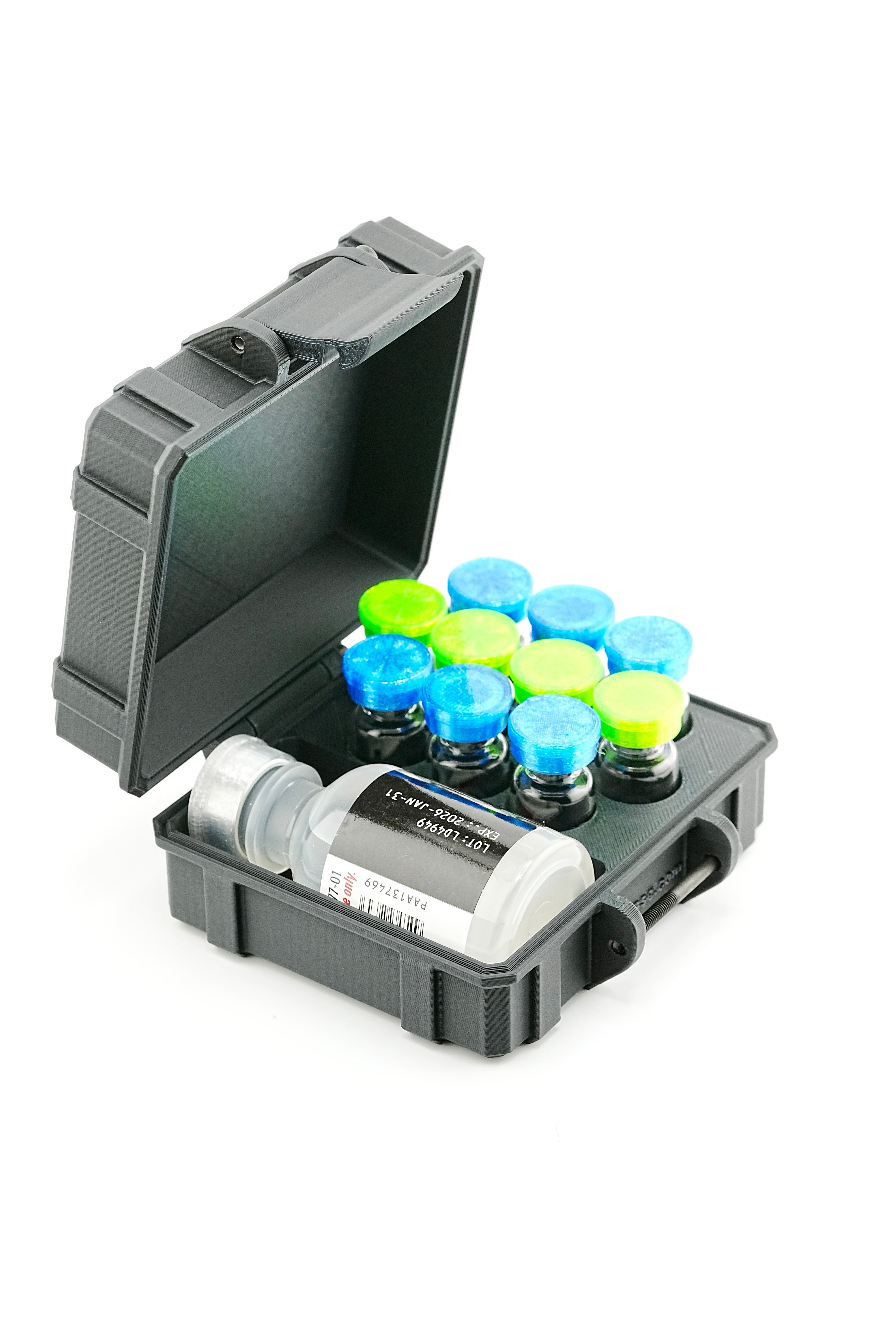
A purpose-built peptide case solves all three problems simultaneously: it blocks light completely, insulates against temperature swings, and cradles each vial in its own foam slot so nothing moves during transport.
Key Insight: Most peptide storage failures don't happen in the fridge — they happen in transit. Between the pharmacy, the border crossing, the gym bag, or the carry-on luggage, your vials face real risks every day. A dedicated case is the single biggest quality-of-life upgrade for anyone running a consistent peptide protocol.
The 5 Things Every Peptide Case Must Have
Before we get to specific product recommendations, here's the non-negotiable checklist. Any peptide case worth buying should hit all five of these:
1. Hard Shell Construction
Soft pouches, silicone sleeves, and padded bags do not protect glass vials from impact. If you drop a soft case, you drop your vials. A hard-shell case — typically made from ABS plastic, aluminum, or polycarbonate — absorbs and distributes impact force, protecting the vials inside even from significant drops. This is non-negotiable if you're transporting peptides.
2. Pre-Cut Foam Vial Slots
Each vial needs its own dedicated slot. Pre-cut foam (EVA or polyurethane) holds vials upright, prevents lateral movement, and stops glass-to-glass contact. Foam that's cut specifically for 3ml or 10ml peptide vials (as opposed to generic foam) will also keep vials from rattling — which matters more than most people realize when you're running through airports or across rough roads.
3. Complete Light Blocking
When the case is closed, zero light should reach your vials. This means opaque shell walls and a secure latch system that keeps the lid fully sealed. Cases with mesh windows, transparent panels, or loose lids fail this requirement. When you're traveling, your peptides can spend 8–12 hours in a bag before you open the case again — every minute counts.
4. Proper Sizing for Peptide Vials
Standard research peptide vials are 3ml (about 45mm tall, 13mm diameter). Bacteriostatic water vials are typically 10ml (about 56mm tall, 23mm diameter). These are not the same dimensions as insulin vials, supplement vials, or most lab equipment. A case designed generically for "vials" may be too large (vials rattle) or too small (foam slots too tight, damaging the rubber stopper). The best peptide cases are designed specifically for these dimensions.
5. TSA-Friendly Profile
If you travel with peptides — and most users do, at some point — your case will go through TSA screening. An organized, professional-looking hard-shell case sends a very different signal than a Ziploc bag of glass vials. TSA agents are far less likely to pull you aside for questioning when your medications are clearly organized and properly stored. For international travel or border crossings, this matters even more.
What to Avoid: Common Peptide Case Mistakes
The market is flooded with options that look like they'll work but fall short in practice. Here's what to avoid when shopping for peptide cases:
Generic Fishing Tackle or Art Supply Cases
You'll find plenty of advice on forums suggesting "just use a fishing lure case" or a cheap arts and crafts organizer. These have transparent lids (no light protection), no foam padding (just empty plastic compartments), and flimsy hinges that don't survive travel. They also look nothing like a medical storage case, which matters when you're crossing a border or going through TSA.
Silicone Vial Sleeves
Silicone sleeves protect individual vials from casual contact but provide zero structural protection from drops, no light blocking when the vial is out of a case, and no way to transport multiple vials safely together. They're supplements to a real case, not replacements.
Repurposed Pill Cases
Standard pill organizers are designed for tablets, not glass vials. The compartment dimensions are wrong, there's no foam to absorb impact, and most are not light-tight. Some users try pill cases for reconstituted syringe storage — this also fails because the compartments aren't sterile environments and syringes can puncture the plastic.
Non-Insulated Cases for Long Travel
If you're traveling for more than 2-3 hours with reconstituted peptides, you need either an insulated case or a cold pack. A standard hard-shell case without insulation will reach ambient temperature within 30–60 minutes in a warm bag. For travel, look for cases with EVA foam lining (which provides minor thermal insulation) or pair a standard case with a purpose-sized gel pack.
Pro Tip: If you're buying peptides in Mexico or traveling internationally with a peptide protocol, the combination of a hard-shell case + small gel cold pack + printed documentation (purchase receipt or prescription) is the standard setup used by experienced travelers. See our complete TSA and border travel guide for specifics.
Peptide Cases by Use Case: Which Type Do You Need?
Not all peptide users have the same needs. Here's how to match a case to your specific situation:
Home Storage Only
If you never travel with your peptides and only need a case to keep vials organized and protected in your fridge, a standard hard-shell case is ideal. The priority is light blocking when you open the fridge door, foam slots to keep vials from tipping, and a latch that stays closed securely in a refrigerator environment. Look for a case that fits on a standard refrigerator shelf without taking up excessive space.
Daily Carry / Gym Use
If you're carrying peptides to the gym or dosing away from home, you need maximum impact protection and compact size. A case that holds 4–6 vials with a secure latch is ideal. Hard-shell ABS or aluminum construction handles drops in gym bags. Look for a case slim enough to fit in a standard gym bag side pocket.
Travel (Domestic Flight)
For domestic air travel, the priority is TSA compatibility and light protection. A hard-shell case with a professional appearance, organized foam slots, and room for your syringes alongside your vials covers all bases. Carry-on only — never check peptides. Pair with a TSA-approved gel cold pack for trips over 4 hours.
Travel (International / Border Crossing)
International travel requires the most robust case setup. You want a case with a locking latch (combination lock or keyed) for customs security, room for documentation alongside your vials, and maximum physical protection. A larger case that holds your complete protocol — all vials, syringes, BAC water, alcohol swabs — streamlines customs interactions dramatically versus having items scattered across your luggage.
Multi-Peptide Protocol
If you're running three or more peptides simultaneously — for example, BPC-157 + TB-500 + GHK-Cu, or a GLP-1 alongside peptides — you need a case with enough capacity to hold everything organized. Cases with 8, 10, or 12+ vial slots are ideal. Color-coded foam inserts or labeled foam slots prevent dosing errors when you're grabbing vials quickly.
The PeptideCase.com Recommendation
After evaluating every major option on the market, the cases available through VialCase — the manufacturer behind PeptideCase.com — consistently perform best across all the criteria above. Here's why they stand out:
- Purpose-built dimensions: The foam slots are engineered specifically for standard 3ml and 10ml peptide vials — not adapted from a generic template.
- Complete light blocking: When the case is closed, it's completely opaque. Photooxidation is eliminated entirely.
- Hard-shell crush resistance: Drop-tested construction withstands the realities of gym bags, airplane overhead bins, and border crossings.
- Clean, professional appearance: The cases look like medical-grade storage — not like something you put fishing tackle in. This matters at TSA and customs.
- Multiple size options: From compact 4-vial cases to larger protocol cases holding 12+ vials, the lineup covers every use case described above.
- 30-day risk-free trial: Every case comes with a satisfaction guarantee. If it doesn't work for your protocol, you can return it.
Where to Buy: All cases are available directly at VialCase.com. Free shipping on orders in the USA. If you see these cases listed on third-party marketplaces, verify they're sold by the official VialCase store to ensure you receive the current version and the full guarantee.
How to Organize Your Peptides Inside a Case
A good case is only as useful as the system you use inside it. Here are the organization best practices used by experienced peptide users:
Label Every Vial
This sounds obvious, but dosing errors from unlabeled vials are far more common than people admit. Use a permanent marker directly on the vial cap, or get small round label stickers (8mm diameter) to write the compound name, concentration, and reconstitution date. If you're running multiple peptides with similar-looking vials, different-colored labels per compound are worth the small effort.
Keep BAC Water in a Dedicated Slot
Your 10ml BAC water vial should have a dedicated, labeled slot — separate from your peptide vials. Accidentally drawing from the wrong vial during reconstitution wastes expensive peptide and can introduce contamination. Many users use the slot nearest to the case latch as a consistent "BAC water slot" so it's always in the same position.
Store Syringes Separately
Some cases include dedicated syringe channels alongside vial slots. If yours doesn't, keep syringes in a separate small case or the pouch of a larger travel case. Loose syringes in a vial case can puncture foam, damage the case interior, and create a contamination risk for your vials.
Rotate Your Vials
If you're storing multiple vials of the same compound, put the most recently reconstituted vials at the back and draw from the front (oldest first). This prevents a scenario where an older vial gets pushed to the back and you forget it exists until it's degraded.
Frequently Asked Questions About Peptide Cases
How many vials should my case hold?
Match your case capacity to your protocol. If you're running one or two peptides with a single BAC water vial, a 4–6 slot case is sufficient. Multi-peptide users or anyone with a GLP-1 protocol should consider a 8–12 slot case. When in doubt, size up — having extra slots is less frustrating than running out of space when you add a new compound.
Can I store my case at room temperature?
Lyophilized (unreconstituted) peptides can be stored at room temperature for short periods, but refrigeration is always preferred. Once reconstituted, your peptides must be refrigerated — the case goes in the fridge with you. A good hard-shell case fits comfortably on standard refrigerator shelves.
Is a peptide case worth it for just one or two vials?
Yes. Even a single vial of BPC-157, TB-500, or a GLP-1 represents a significant cost — often $40–$150 or more per vial depending on the source. A quality case that costs $25–$60 pays for itself the first time it prevents a dropped vial from shattering, or the first time you travel and don't get pulled aside at TSA. The math is simple.
What's the difference between a peptide case and a vial case?
The terms are interchangeable. A peptide case is a vial case designed specifically for the dimensions and storage needs of research peptides (primarily 3ml peptide vials and 10ml BAC water vials). The key distinction is "designed specifically for" — generic vial cases or lab supply vial holders aren't optimized for peptide dimensions and lack the light blocking that peptides require.
Do I need a case if I'm not traveling?
Yes, for two reasons. First, your refrigerator opens multiple times daily, exposing your vials to ambient light and minor temperature fluctuations. An opaque case inside the fridge eliminates both. Second, organization — if you're running multiple compounds, a case with labeled slots prevents mix-ups and keeps your protocol clean and professional.
The Bottom Line on Peptide Cases
Peptide cases are not optional equipment for anyone serious about their peptide protocol. The combination of fragile glass vials, photosensitive compounds, and the need for refrigeration means that proper storage directly impacts efficacy. Cutting corners on storage is the most expensive way to save money — you're degrading the very compound you paid for.
The criteria are straightforward: hard shell, foam vial slots sized for 3ml and 10ml peptide vials, complete light blocking, and a professional appearance that works at TSA and customs. Cases that hit all five are worth the investment. Cases that miss any one of them create a gap in your protocol's reliability.
PeptideCase.com was built around exactly this principle. We've tested every option on the market so you don't have to, and the recommendation is consistent: purpose-built cases from VialCase represent the best combination of protection, organization, and value in the market.
For more on storage science, see our complete peptide storage guide. For travel-specific advice, see our TSA and border crossing guide. For a breakdown of the top-rated cases by category, see our best peptide cases of 2026 roundup.
Disclaimer: PeptideCase.com provides information for educational and organizational purposes. Peptides discussed on this site are intended for research use only. Always consult a licensed healthcare provider regarding the use, storage, and handling of any compounds. Information on this site does not constitute medical advice.