Why Looksmaxers Are Choosing Retatrutide Over Semaglutide
Semaglutide was the first GLP-1 peptide to go mainstream, but the looksmaxing community moved to Retatrutide almost immediately after it became available. The reason: Retatrutide is a triple agonist — it hits three receptors instead of one:
- GLP-1 (glucagon-like peptide-1): Appetite suppression, insulin sensitization, the same mechanism as Semaglutide and Tirzepatide
- GIP (glucose-dependent insulinotropic polypeptide): Enhanced insulin response, fat mobilization — the same dual-agonism that makes Tirzepatide stronger than Semaglutide
- Glucagon receptor: This is the game-changer. Direct fat oxidation, thermogenesis, and hepatic fat reduction. This third receptor is what makes Retatrutide the strongest GLP-1 class compound
In clinical trials, Retatrutide produced up to 24.2% body weight loss at 48 weeks — the highest of any GLP-1 class drug ever tested. For looksmaxers, this translates to dramatic facial fat reduction that reveals the bone structure underneath.
The "Face Gains" Effect
Looksmaxing forums are filled with before/after posts showing the same pattern: a round, soft jawline transforms into sharp, defined angles after 8-16 weeks on Retatrutide. This isn't just weight loss — it's strategic fat loss that disproportionately improves facial aesthetics.
Here's why the face changes so dramatically:
- Buccal fat reduction: The fat pads in your cheeks are among the first to shrink on GLP-1 peptides. This reveals zygomatic (cheekbone) definition and creates hollow cheeks — the #1 aesthetic goal in looksmaxing
- Submental fat loss: Under-chin fat disappears, sharpening the jawline-to-neck angle. Combined with a tan from MT2, the visual contrast is dramatic
- Periorbital changes: Facial fat loss reduces puffiness around the eyes, making eye area appear more defined and hunter-eyed
- Overall facial harmony: Lower body fat reveals the underlying facial thirds ratio — forehead, midface, and lower third become more proportional
The Clavicular Stack: Looksmaxing influencers and the community on Looksmax.org consistently recommend stacking Retatrutide with MT2 for the maximum "glow-up." Facial fat loss + deep tan = maximum bone structure visibility. Add GHK-Cu for skin quality and you have the complete facial aesthetics trifecta.
Retatrutide Dosing for Looksmaxing
The looksmaxing community approaches Retatrutide differently than pure weight loss users. The goal isn't maximum weight loss — it's optimal facial definition without looking gaunt or losing muscle.
- Start low: 1-2mg weekly for the first 2-4 weeks. GI side effects (nausea, appetite suppression) are strongest during titration
- Titrate to target: Most looksmaxers settle at 4-8mg weekly — enough for significant fat loss without the muscle-wasting that comes at higher doses
- Weekly injection: Retatrutide's long half-life (~6 days) means once-weekly dosing. One reconstituted vial typically lasts 4-8 weeks depending on dose
- Stack with resistance training: Critical for preventing muscle loss. Looksmaxers combine Retatrutide with heavy compound movements and adequate protein (1g/lb bodyweight minimum)
The extended dosing schedule is actually a storage advantage — one reconstituted vial sits in your fridge for weeks. But that also means weeks of potential degradation if it's not stored properly.
Retatrutide in the Looksmaxing Stack
Retatrutide is rarely run alone in a looksmaxing protocol. Here's how it fits with other compounds:
- Retatrutide + MT2: The flagship looksmaxing combo. Lean face + deep tan. 2 active vials minimum
- Retatrutide + GHK-Cu: Fat loss + skin quality. As you lose facial fat, GHK-Cu ensures the skin tightens rather than sagging. Particularly important for anyone over 25
- Retatrutide + CJC/Ipa: Fat loss + growth hormone. HGH supports muscle retention during the cut and enhances skin elasticity
- Retatrutide + BPC-157: Fat loss + gut healing. GLP-1 peptides can cause GI distress — BPC-157 supports gut lining integrity during the protocol
- Full stack: Retatrutide + MT2 + GHK-Cu + CJC/Ipa = 4-5 active vials, all needing cold, dark, organized storage

Why Retatrutide Storage Matters More Than You Think
Retatrutide is a large, complex peptide — 39 amino acids with a C20 fatty acid chain that gives it its long half-life. That same complexity makes it sensitive to degradation:
- Light sensitivity: The fatty acid linker that extends half-life is susceptible to photo-oxidation. UV and visible light break it down, shortening the effective half-life of each dose
- Temperature cycling: Repeated warming (taking it out of the fridge, using it, putting it back) accelerates aggregation. The peptide chains clump together, reducing bioavailability
- Long exposure window: Because you only dose once weekly, a single vial sits reconstituted for 4-8 weeks. That's 4-8 weeks of cumulative light exposure every time you open the fridge
The Math: At $80-120 per vial, a 16-week Retatrutide cut uses 2-4 vials — $160-480 in peptides. Losing 15-20% potency to bad storage means you're essentially throwing away $25-100 worth of compound. An opaque storage case pays for itself in the first month.
Retatrutide Storage Protocol
- Reconstituted shelf life: 4-6 weeks with BAC water at 2-8°C. Mark the date you reconstitute on the vial
- Use BAC water, not sterile water: The benzyl alcohol preservative is essential for vials that sit for weeks between doses
- 100% light blocking: Not amber vials (transmit visible light), not foil (tears and falls off). A fully opaque case is the only reliable solution
- Back of the fridge: Temperature is most stable here. Avoid the door shelf where temps fluctuate with every open
- Don't pre-load syringes: Some users pre-fill syringes for convenience. This dramatically increases surface area exposed to air and light — always draw fresh
Signs Your Retatrutide Has Degraded
- Reduced appetite suppression: If your normal dose stops killing your appetite, the compound may have lost potency
- Cloudiness or particles: Fresh Retatrutide solution is clear and colorless. Any cloudiness indicates protein aggregation
- Increased injection site reactions: Degraded peptide fragments can trigger more inflammation at the injection site
- Weight loss plateau: If your cut stalls despite consistent dosing and diet, check your vial before adjusting the dose
Retatrutide Results Timeline for Looksmaxing
- Week 1-2: Appetite suppression kicks in. No visible facial changes yet. Some nausea during titration
- Week 3-4: First signs of facial fat loss. Jawline begins emerging. Scale starts moving
- Week 6-8: Noticeable face gains. Cheekbones visible, jawline sharpening. This is when people start commenting
- Week 10-16: Peak transformation. Dramatic before/after difference. Buccal fat significantly reduced. If stacked with MT2 and GHK-Cu, the full glow-up is in effect
Bottom Line: Retatrutide is the most powerful facial fat loss tool in the looksmaxing arsenal. But its complex structure and long reconstituted shelf life make proper storage non-negotiable. Every week your vial sits in a lit fridge, you're losing potency — and the face gains that come with it. Keep it cold, keep it dark, protect the cut.
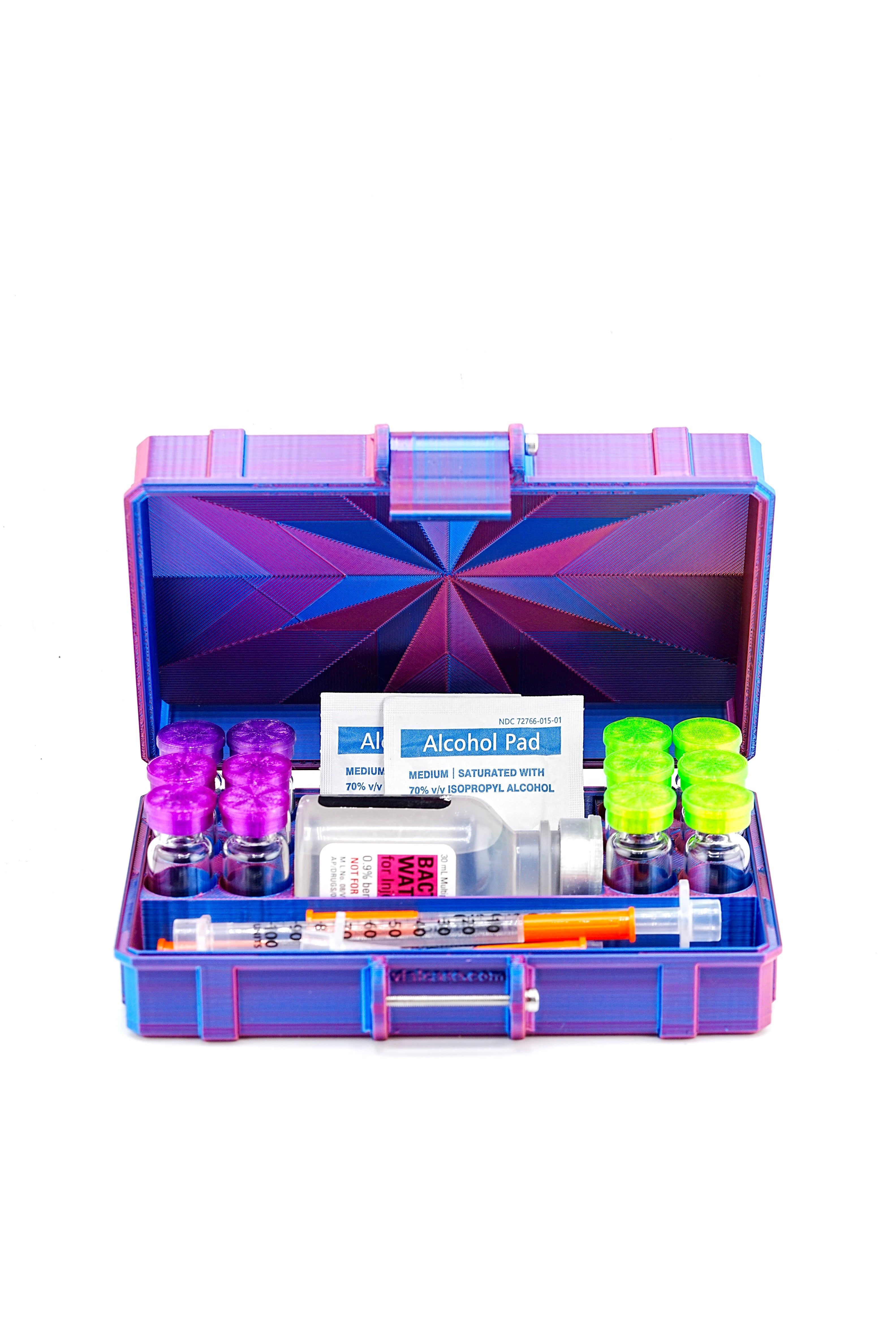
"Running reta weekly means my vial sits for a month. This case blocks all light so I'm not wasting $100 vials on degraded compound."
— Chris M., Verified Buyer
Shop PeptideCase →Disclaimer: This content is for informational and educational purposes only. It is not medical advice and does not constitute a doctor-patient relationship. Peptides discussed are research compounds — consult a licensed healthcare provider before use. PeptideCase sells storage products only and does not sell, manufacture, or distribute peptides or pharmaceuticals.