The Real Degradation Timeline: How Long Do You Have?
The first thing to understand in a power outage is that you're not facing an instant crisis — but the clock is running. The degradation timeline for peptides at room temperature depends heavily on whether they're lyophilized or reconstituted:
- Reconstituted peptides (in BAC water, in solution): These are your most vulnerable vials. At room temperature (20–25°C), meaningful degradation begins within 4–8 hours for most peptides. Some are more heat-stable than others, but none are safe left at room temperature indefinitely. GLP-1 compounds like semaglutide and tirzepatide are particularly sensitive.
- Lyophilized (freeze-dried) powder: Far more forgiving. Lyophilized peptides can survive at room temperature for days to weeks without significant potency loss. If your unopened, unreconstituted vials warm up during an outage, they are almost certainly fine.
- Branded GLP-1 pens (Ozempic, Mounjaro, Wegovy, Zepbound): These have FDA-validated room-temperature stability of 21–56 days, so a brief outage is not a concern at all.
Bottom line: your reconstituted peptide vials are the priority. Everything else can wait.
Pro Tip: The single most important thing you can do right now — before an outage ever happens — is keep a pre-frozen gel ice pack in your freezer at all times. This costs $8 and gives you an instant 8–12 hour cold bridge the moment the power goes out. No scrambling, no sourcing ice from a neighbor at 2am.
Immediate Actions: The First 30 Minutes
When the power goes out, your fridge becomes a passive insulated box. A well-sealed refrigerator maintains safe temperatures (below 8°C / 46°F) for approximately 4 hours if you keep the door closed. Every time you open the door, you lose 15–30 minutes of that buffer. So step one is counterintuitive: do not open the fridge.
Here's the priority sequence for the first 30 minutes:
- Do not open the fridge. The cold air inside is your biggest asset right now. Opening the door to "check" just releases it.
- Assess the outage duration. Check your utility provider's app or website, or text a neighbor. A 30-minute outage requires no action. A storm-related outage predicted to last 12+ hours requires immediate action.
- If extended outage confirmed: open the fridge once, grab your peptide vials and your frozen gel pack. Do this in one organized trip, not multiple opens. Have your insulated case ready before opening.
- Load your insulated case with the gel pack and vials. Close it immediately. Your vials are now in a better cold environment than the fridge was five minutes ago.
- Monitor case temperature if your case has a thermometer slot, or simply note the time and plan to find ice within 8 hours.
The Fridge Bridge Strategy
The most effective power outage protocol is one you set up before the outage happens. We call it the Fridge Bridge: your peptide case lives inside the refrigerator during normal operation, pre-chilled alongside your vials. When power goes out, the case is already cold-soaked — the foam and insulation are at refrigerator temperature, giving you maximum thermal mass the moment you need to move.
Compare this to the alternative: your vials are loose on the shelf, the case is at room temperature, and when you grab the case to load it, the warm interior immediately starts pulling heat from the already-cooling vials. A pre-chilled case maintains cold significantly longer than a room-temperature case loaded with cold vials.
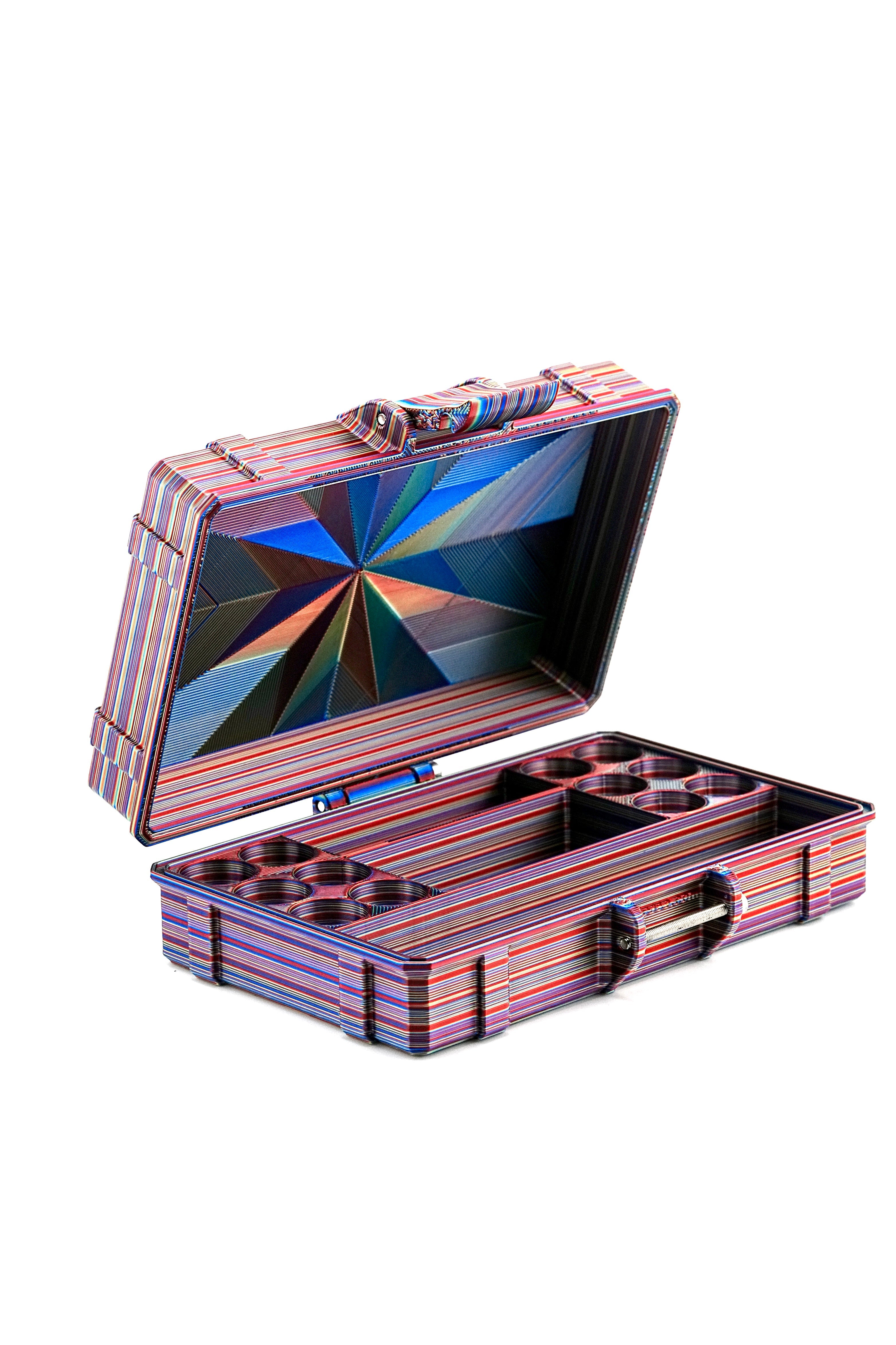
A purpose-built insulated peptide case stored inside your refrigerator also provides daily protection from light and physical impact — the power outage protection is simply a bonus on top of its normal function.
How Long Does an Insulated Peptide Case Hold Cold?
A quality insulated peptide case with a single pre-frozen gel pack (not a thin gel sheet — a proper 200–400g reusable pack) will maintain temperatures below 8°C for 8–12 hours in a typical indoor environment (20–22°C ambient). In a cooler environment, or if you wrap the case in a towel to add insulation, you can extend this to 12–16 hours.
That window covers the vast majority of outage scenarios: summer thunderstorms, utility maintenance windows, brief grid failures. For most people, 8–12 hours is enough time for power to be restored or to source additional ice without any peptide degradation at all.
The key variables that affect cold retention:
- Ice pack mass: Larger packs hold cold longer. A 400g pack lasts roughly twice as long as a 200g pack
- How cold the pack was: A pack frozen at -18°C holds cold longer than one at -5°C from a freezer that runs warm
- Ambient temperature: A 35°C summer house drains cold much faster than a 20°C winter interior
- How often you open the case: Every open releases cold air. Resist the urge to check
Pro Tip: Wrap your ice pack in a single layer of paper towel or thin cloth before placing it in the case with your vials. Direct contact between a frozen pack and a glass vial can cause localized freezing at the contact point, which damages peptide bonds even if the bulk of the solution stays liquid. The barrier keeps temperatures in the safe 2–8°C range rather than dipping below 0°C.
Ice Sourcing: Your Options After 8 Hours
If power remains out after your insulated case has exhausted its cold window, you need to source ice or relocate your vials. Options in order of preference:
- Neighbor's fridge: The fastest and most reliable option. A neighbor with power can store your case — or just your vials — in their refrigerator until yours is restored.
- Gas station or convenience store bagged ice: Widely available 24/7. Place the bag of ice inside a cooler or large container, surround your peptide case with it, and wrap with towels for insulation. This setup easily maintains cold for an additional 12–24 hours.
- Dry ice: Available at many grocery stores. Use with caution — dry ice is -78°C and will freeze and shatter your vials on direct contact. Wrap dry ice in multiple layers of newspaper and keep at least 6 inches of air gap between the dry ice and your vials. Dry ice in a well-insulated cooler can maintain safe peptide temperatures for 24–48 hours.
- Generator mini-fridge: If you have or can borrow a generator, a small 12V camping refrigerator or dorm fridge running on generator power is the gold standard for extended outages. Set to 4°C and your peptides are in identical conditions to normal operation.
Extended Outage: What to Do After 24+ Hours
If your reconstituted peptides have been at room temperature for more than 8 hours, or in an inadequately cooled environment, you face a difficult judgment call. The honest answer is that there's no reliable way to test peptide potency at home. You cannot visually confirm whether a peptide has degraded — a vial can look completely normal while having lost 30–50% of its bioactivity.
Visual warning signs that suggest discard:
- Cloudiness or turbidity in a solution that was previously clear
- Visible particles or flocculation
- Color change from clear/colorless to any tint
- Unusual smell when drawing the vial
If your vials look normal but experienced >8 hours above 8°C, use your judgment based on cost and criticality. For GLP-1 medications and high-cost peptides, the risk of degraded medication — ineffective dosing, potential injection site reactions from aggregated protein — usually outweighs the cost of replacement. For lyophilized vials, you almost certainly have nothing to worry about and can reconstitute fresh.
Why Having a Quality Case Before an Emergency Matters
The time to acquire and set up your emergency protocol is not during a power outage — it's now. A dedicated peptide storage case already living inside your refrigerator, already cold-soaked, already loaded with your vials, transforms a potential $400+ loss into a non-event. The case doubles as your everyday solution for preventing the most common storage mistakes, organizes your protocol, and turns any power emergency into a 30-second transfer rather than a frantic search for a bag and some ice.
View the full VialCase lineup to find the right size for your protocol — whether you're storing 3ml research peptides, 10ml GLP-1 vials, or a full multi-compound stack.
Bottom Line: A power outage is a manageable event if you have the right equipment already in place. A pre-frozen gel pack and a quality insulated case buy you 8–12 hours — enough to cover nearly every real-world outage scenario without losing a single vial.