Traveling with peptides involves a different set of demands than home storage. Your case needs to handle physical shock during transport, temperature excursions in airport security lines and hotel rooms, TSA scrutiny, and the loss of your home fridge as a backup. The wrong case turns a weekend trip into a protocol disruption. Here are all 10 common travel storage approaches ranked, from least to most effective for real-world travel.
#10 — Worst: Packed in Checked Luggage
Not a case choice — a placement choice that overrides every other variable. Checked luggage cargo holds can reach temperatures below −20°C at cruising altitude. Reconstituted peptides will freeze and lose potency. Even lyophilized powder can be affected by the mechanical shock of baggage handling. The first rule of traveling with peptides is non-negotiable: carry-on only, always. Whatever case you use is secondary to this.
#9 — Soft Fabric Pouch (No Ice Pack, No Structure)
A fabric pouch in your carry-on bag provides zero temperature management, zero impact protection, and zero organization. Vials shift freely inside the bag and rattle against each other during taxi, takeoff, and turbulence. Fine for a short drive where ambient temperature is controlled. For a flight, this is not a serious travel storage solution.
#8 — Ziploc Bag with Paper Towel Padding
A commonly improvised solution: vials wrapped in paper towel inside a Ziploc bag. The paper towel provides nominal cushioning and the Ziploc prevents loose items. For a short car trip, this is barely acceptable. For air travel with any turbulence or gate-checked bag handling, the paper towel compresses quickly and the vials end up loose. Not designed for the mechanical stress of actual travel.
#7 — Basic Insulated Lunch Bag (No Ice Pack)
An insulated bag without a cold pack provides only minimal thermal protection — slowing temperature rise from ambient heat, but providing no active cooling. At a summer airport where gate temperatures can reach 28–32°C, a insulated bag without ice will hold contents slightly cooler than ambient for a few hours, then equalize. Not sufficient for GLP-1 compounds requiring strict 2–8°C maintenance during longer transits.
#6 — Styrofoam Shipping Box Fragment
Repurposing a fragment of the insulated shipping box your peptides arrived in. Styrofoam is a legitimate thermal insulator when used properly with ice packs. The problems: styrofoam fragments don’t seal tightly, they’re bulky relative to their capacity, and they fall apart with handling. Functional for a single use; not a repeatable travel system.
Pro Tip: TSA allows medically necessary liquids (including injectable medications and their supplies) in volumes exceeding 3.4oz when declared at the checkpoint. Inform the TSA officer before scanning. Research peptides are in a gray area — keep them in their original vendor packaging with a clear label if possible, and expect occasional additional screening. See our full TSA peptide guide for the complete checkpoint protocol.
#5 — Insulated Pouch with Single Slim Ice Pack
This is the minimum viable setup for air travel with temperature-sensitive peptides. A soft insulated pouch with a single slim reusable ice pack holds 2–8°C for approximately 4–8 hours depending on ambient temperature and pack quality. Sufficient for domestic flights under 4 hours with a thin ice pack. For longer trips or international travel, you need a more robust thermal solution. Vials still need padding inside — most soft pouches don’t provide foam vial slots.
#4 — Hard-Shell Case with External Cooler Bag
A two-layer solution: your VialCase or similar hard-shell case inside an insulated cooler bag with ice packs. The hard case handles vial security and organization; the cooler bag handles temperature. This combination outperforms purpose-built “medical travel cases” that try to do both in a single soft-sided product. The downside is bulk — carrying two cases is more cumbersome than one integrated solution.
#3 — Medical-Grade Insulated Hard Case
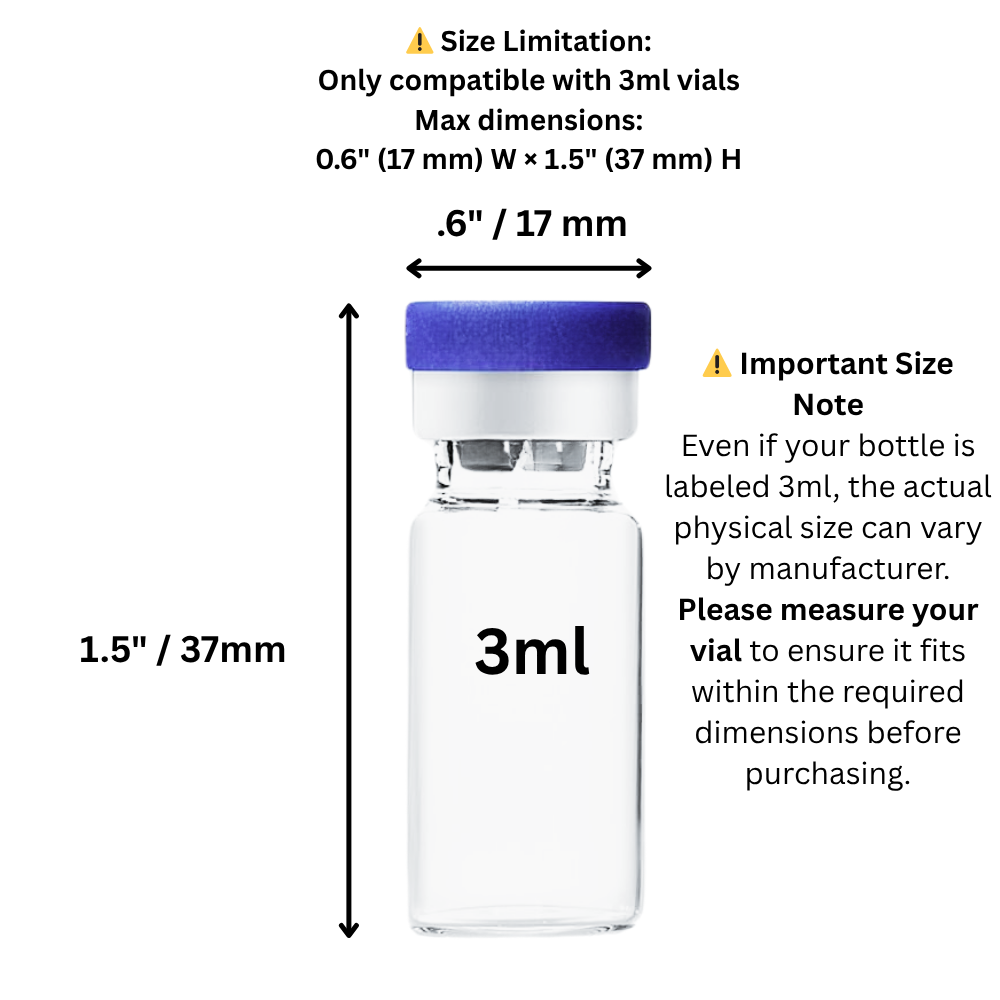
Cases sold specifically for medication transport — with rigid exterior, internal foam, and built-in insulation — are a step up. They handle impact, maintain temperature with included ice packs, and look professional at TSA. The limitation for peptide users: these cases are usually designed for pharmaceutical pen injectors or vials in standard pharmaceutical sizes, not research-grade 10ml peptide vials. Fit can be imperfect. Good category; check dimensions carefully before buying.
#2 — FRIO Cooling Wallet + Hard Peptide Case
FRIO cooling wallets use evaporative cooling to maintain 18–26°C for up to 45 hours without refrigeration. This isn’t cold enough for strict 2–8°C peptide storage, but it prevents the dangerous overheating that occurs when medications are left in a warm car or hot airport terminal. Used as a transport layer around a hard case, FRIO technology provides meaningful protection for compounds that can tolerate brief room-temperature excursions (some branded GLP-1 pens, for instance). Not suitable as the sole temperature solution for reconstituted aqueous peptides requiring strict cold-chain.
#1 — Best: VialCase + Quality Ice Pack in Carry-On
The optimal peptide travel setup: VialCase (for vial security, organization, and light blocking) inside your carry-on with a high-quality slim ice pack. The VialCase keeps your vials immobilized and organized; the ice pack maintains temperature during transit. This combo fits in the personal item pocket of most carry-on bags, passes TSA without issue when declared as medication, and handles the mechanical stress of flight without any vial movement or risk of breakage.
For hotel stays, your VialCase goes straight into the room fridge — no repacking, no improvisation. The same case handles home storage and travel storage seamlessly. Get your travel-ready VialCase →
Pro Tip: Gel ice packs can be confiscated at TSA if not fully frozen solid. At departure, use a pack that’s been in the freezer overnight. If you’re on a multi-day trip, buy a new pack at a pharmacy at your destination or use the hotel minibar freezer to refreeze. Ice packs are cheap and widely available; peptide vials are not.
TSA Quick Reference for Peptides
Medically necessary liquids, including injectable medications, are exempt from the 3.4oz (100ml) liquid rule. Declare them separately at the checkpoint. They will typically be visually or chemically screened. Ice packs are allowed if frozen solid when presented. BAC water (bacteriostatic water for injection) is a medical supply and is allowed. Syringes and needles are allowed when accompanied by injectable medication. For the complete protocol, see our peptide TSA guide.
Frequently Asked Questions
Can I bring peptides internationally?
Depends heavily on destination country. Many countries have strict rules on research compounds and injectable medications. Research the specific import regulations for your destination before traveling. See our international travel guide for country-specific guidance.
How long can peptides stay at room temperature during travel?
This varies by compound. Reconstituted peptides with BAC water: most research suggests brief room-temperature excursions (under 4–6 hours) cause minimal degradation if the vial returns to 2–8°C promptly. Repeated or prolonged exposure is the problem. Lyophilized powder: more tolerant of temperature variation, but still should not be exposed to heat above 25–30°C for extended periods.
Should I freeze my peptides before a long flight?
Only lyophilized (powder) peptides should be frozen, and only intentionally with a proper freeze protocol. Never freeze reconstituted peptides — ice crystal formation damages peptide structure in solution. For air travel, a quality ice pack maintaining 2–8°C is the correct approach. Freezing reconstituted vials to “keep them colder longer” is one of the most common and damaging travel mistakes.