Ozempic® and Wegovy® (branded semaglutide by Novo Nordisk) come in pre-filled auto-injector pens. Compounded semaglutide comes in 3ml or 10ml vials requiring reconstitution. The storage requirements are nearly identical — 2–8°C refrigeration, light protection, and protection from freezing — but the ideal storage case differs significantly between pen users and vial users. This list covers both, ranked by actual protection quality.
Note: Ozempic® and Wegovy® are registered trademarks of Novo Nordisk. This guide covers storage solutions for both branded and compounded semaglutide formulations.
#10 — Worst: Fridge Door Shelf (No Container)
The door shelf is where most people store their Ozempic® pen out of habit — it’s visible, accessible, and feels organized. It’s also the worst location in the fridge for any temperature-sensitive compound. Every time the door opens, door shelf temperature spikes 5–8°C. A once-weekly injection protocol means the pen or vial spends six days absorbing those thermal excursions. Novo Nordisk’s prescribing information specifically warns against door storage for this reason.
#9 — Branded “Diabetes” Neoprene Pen Case
The most common semaglutide storage product category. Soft neoprene pouch, elastic pen pockets, usually branded with a generic medical motif. These are designed for pen transport — taking your dose to work, carrying in a handbag — not for weekly home storage. The soft construction offers no impact protection, neoprene transmits diffuse light, and there’s no temperature management at home where the fridge is already doing that job. Useful accessory for on-the-go carry; wrong primary storage solution.
#8 — Original Ozempic® Pen Packaging
The carton your pen shipped in. Blocks light, holds the pen securely in its original foam insert, and is free. Completely adequate for the first week. The degradation problem: pharmaceutical cardboard in a humid refrigerator environment softens over 2–4 weeks. The original carton that holds your Ozempic® pen perfectly on day one is a floppy, moisture-stained mess by week four. Don’t rely on it as a long-term solution for multi-month treatment courses.
#7 — Small Zippered Pouch (Fabric)
A small fabric zipper pouch keeps your pen and supplies together and prevents them from rolling around in the fridge. Better organization than door shelf storage alone. Persistent limitations: fabric offers no structure or impact protection, most fabric pouches admit light, and there’s no designated space for needles or alcohol swabs. A step up on organization; not a step up on protection.
#6 — Cooler Bag with Slim Ice Pack (Home Storage Misuse)
Frequently recommended in online GLP-1 communities for “extra protection.” At home, where your fridge maintains 2–8°C reliably, a cooler bag adds nothing useful. Your fridge is already doing better temperature management than any cooler bag at home. The only legitimate use is travel — where a cooler bag with a slim ice pack maintains temperature during transit. Using one at home signals anxiety about storage without solving any real problem.
Pro Tip: For pen users: Ozempic® pens in use can be kept at room temperature (up to 30°C / 86°F) for up to 56 days per Novo Nordisk’s labeling. Unopened pens should be refrigerated. For compounded semaglutide vials: always refrigerate, never freeze, and track reconstitution date carefully — the 4–6 week BAC water window applies here the same as any peptide.
#5 — Hard-Shell Cosmetic Case (Clear)
Clear-paneled hard cases are structurally sound — rigid, latching, and compact. They fail on light blocking for the same reason clear Tupperware does: every fridge door opening delivers a full light exposure. For pen users, the concern is lower (branded pens have their own internal protection); for compounded semaglutide in clear glass vials, light exposure is a direct potency threat. If the case is your only storage layer, it needs to be opaque.
#4 — Opaque Hard-Shell Case (Generic)
Opaque, rigid, and with a latching lid. Blocks light, contains spills, and keeps everything together. The gap between this and purpose-built cases: no foam vial slots (vials can still shift and rattle), and no organized compartments for needles, swabs, and accessories. For someone on a simple once-weekly pen protocol, this is a completely functional solution. For compounded semaglutide users managing vials, syringes, and BAC water, you’ll want more organization.
#3 — Insulated Locking Medication Case
Hard-shell, lockable, with basic internal organization. The lock is a meaningful feature for households with children — semaglutide pens should be stored out of reach. The limited internal organization (typically one tray or divider) is the main constraint. These cases are designed for pill bottles and blister packs, not pen injectors or 10ml vials. A legitimate choice if household security is a priority; less optimal purely on organization grounds.
#2 — Purpose-Built Diabetic/Injection Supply Case
Cases specifically designed for insulin injection protocols — typically with pen pockets, a dedicated slot for a vial, and syringe storage — are the closest existing product to what semaglutide users actually need. The fit is imperfect for 10ml compounded semaglutide vials (insulin vials are slightly smaller), and most are designed for insulin pen dimensions, not Ozempic® pen dimensions. But they get closer to purpose-built than generic alternatives.
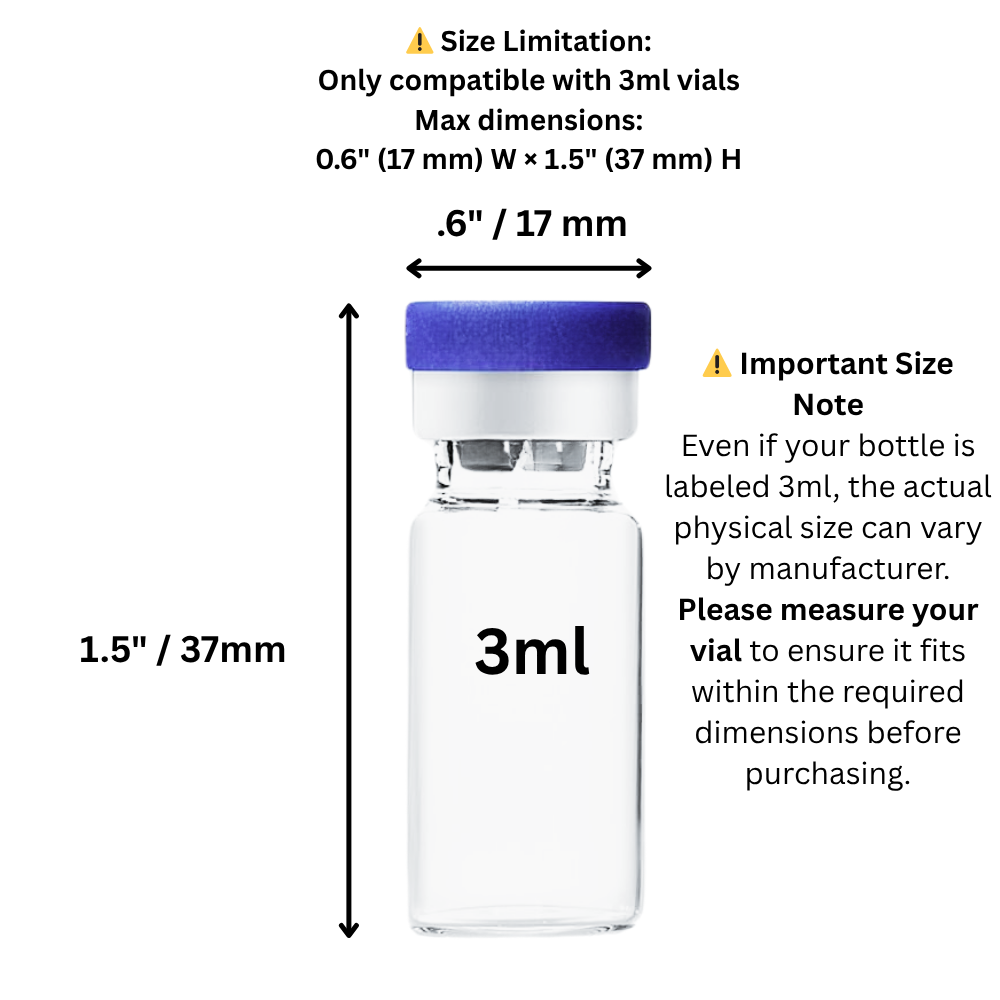
#1 — Best: VialCase Dedicated Peptide Vial Case
For compounded semaglutide users, VialCase is the definitive answer: precision foam slots for 3ml and 10ml vials, dedicated syringe compartment, BAC water slot, fully opaque hard shell with a secure latch, and a fridge footprint designed for the back-of-middle-shelf position. Your entire weekly semaglutide protocol — vial, BAC water, syringes, needles, swabs — in one light-blocking, impact-resistant, organized case.
For pen users running branded Ozempic® or Wegovy®, VialCase still provides meaningfully better protection than neoprene pouches: the hard shell protects the pen mechanism, and the opaque construction blocks the light exposure that accumulates over multi-week treatment courses. Find the right semaglutide case at VialCase →
Pro Tip: If you switch between branded pens and compounded vials during supply transitions, keep a single VialCase as your permanent storage system. Label each slot. Your protocol stays organized through supply changes, and you never have to rebuild your storage setup from scratch when formulations change.
Semaglutide Storage Rules at a Glance
Unused/unopened Ozempic® pens: refrigerate at 2–8°C. In-use pens: can be stored at room temperature up to 30°C for up to 56 days (Ozempic®) or 28 days (Wegovy®) — check current labeling for your specific product. Compounded semaglutide vials (reconstituted): refrigerate at 2–8°C, use within 4–6 weeks with BAC water. Never freeze any semaglutide formulation. See our full semaglutide storage guide for complete protocols.
Frequently Asked Questions
Can Ozempic® be left out of the fridge overnight?
An in-use Ozempic® pen can be kept at room temperature (up to 30°C) for up to 56 days per Novo Nordisk labeling. A single overnight at room temperature is not a problem for an in-use pen. Unused, unopened pens should be refrigerated until first use. Compounded semaglutide vials should be refrigerated at all times once reconstituted.
What case is best for traveling with Ozempic® on a plane?
A hard-shell insulated case with a reusable slim ice pack handles the airport portion. Keep pens or vials in your carry-on (never checked luggage — cargo holds can freeze). An in-use Ozempic® pen doesn’t need refrigeration during travel within its 56-day room temperature window. For compounded semaglutide, keep it cold at all times. See our TSA travel guide for the full protocol.
Does semaglutide need to be protected from light?
Yes. Both branded and compounded semaglutide should be protected from direct light and prolonged light exposure. Novo Nordisk provides opaque labeling on branded pens for this reason. Compounded semaglutide in clear vials is fully exposed to light in a transparent container — an opaque hard-shell case provides the protection the vial itself doesn’t.