Managing multiple peptides simultaneously means tracking reconstitution dates, concentrations, dosing schedules, and remaining volumes across several different vials. The wrong storage setup turns this into a daily scavenger hunt and increases the risk of dosing errors. The right setup makes your entire protocol visible and accessible in under 30 seconds. Here are the 10 most common approaches, ranked.
#10 — Worst: Multiple Separate Containers (One Per Peptide)
One Ziploc for BPC-157, another Ziploc for TB-500, a third for sermorelin. This feels organized but is actually the worst multi-peptide system: maximum fridge footprint, maximum chance of mixing up unlabeled containers, and the daily ritual of opening multiple bags to access your protocol. As you add compounds, the complexity scales linearly and the system becomes unmanageable.
#9 — Loose in a Large Tupperware (All Vials Together)
All peptides in one container: at least they’re co-located. The problem is identifying them. Unlabeled vials of similar sizes sitting loose in a container create a guessing game every time you dose. With multiple reconstituted peptides at different stages of their shelf life, a single mislabeled draw is a meaningful mistake. Consolidation without organization is just a different kind of chaos.
#8 — Labeled Ziploc Bags
A slight improvement: individual labeled bags. You know which bag contains which compound. The structural problems remain — no foam, no vial security, no impact protection — but at least dosing errors from mislabeled compounds are eliminated. Adequate for two peptides on a simple protocol; unworkable for four or more compounds with different dosing frequencies.
#7 — Weekly Pill Organizer (Repurposed)
The seven-day pill organizer with labeled compartments can hold small 3ml vials with some improvisation. The forced organization (one compartment per compound or per day) makes protocol tracking intuitive. Fatal flaws: pill compartments are not sized for vials, the clear plastic blocks no light, and the open-top design means any spillage in the fridge contaminates every compartment simultaneously. Creative but not reliable.
#6 — Small Fishing Tackle Box
Tackle boxes have multiple adjustable compartments, a latching lid, and are widely available in opaque versions. For multi-peptide storage, this works reasonably well: adjustable dividers can create vial-sized slots, the opaque lid blocks light when closed, and the case sits flat in the fridge. The limitations are depth (tackle boxes are shallow, which limits 10ml vials) and the absence of foam padding. Still one of the better non-purpose-built options for someone managing 4–6 compounds.
Pro Tip: Create a simple protocol log and keep it inside your storage case. For each compound: name, concentration, reconstitution date, dose per injection, and injection frequency. A 3x5 index card works. This eliminates the cognitive load of tracking dates and doses from memory and ensures you never accidentally dose an expired vial or draw from the wrong compound.
#5 — Tiered Fridge Organizer with Separate Vial Trays
Clear acrylic fridge organizers with tiered trays provide excellent visibility and access. For multi-peptide setups, you can designate one tray per compound. The full-visibility design is both this option’s strength and its weakness: you can see everything at a glance, but light protection is nonexistent. For dry lyophilized powder that’s still in its original sealed vial, this is more forgivable. For reconstituted peptides, you’re compromising light protection for organization.
#4 — Opaque Compartmentalized Box (Craft/Art Supply)
Opaque craft supply boxes with multiple adjustable compartments are a legitimately good multi-peptide solution. Multiple compartments handle multiple compounds; opaque lid provides light blocking; adjustable dividers accommodate different vial sizes. What’s still missing: foam padding between vials in the same compartment, and no designated space for BAC water or syringes that need to stay with the kit.
#3 — Two VialCases (Compound Pairs)
For serious multi-compound protocols — four to eight active peptides — two purpose-built cases is a legitimate strategy. Pair compounds by protocol: recovery stack (BPC-157, TB-500) in one case; hormone stack (sermorelin, CJC-1295, ipamorelin) in another. Each case handles light blocking and vial security for its compounds. This is more organized than any general-purpose solution, though less convenient than a single case when you need compounds from both stacks in one session.
#2 — Large-Format Foam-Lined Hard Case
A larger pelican-style or similar case with custom foam cut for 6–10 vials provides excellent multi-compound storage. Individual foam slots eliminate any inter-vial contact or movement. Full light blocking. Enough room for BAC water, syringes, and accessories if the foam is cut accordingly. The investment in cutting precise foam for 10 different vial slots is significant but, when done well, creates the most organized multi-peptide setup outside of a purpose-built case.
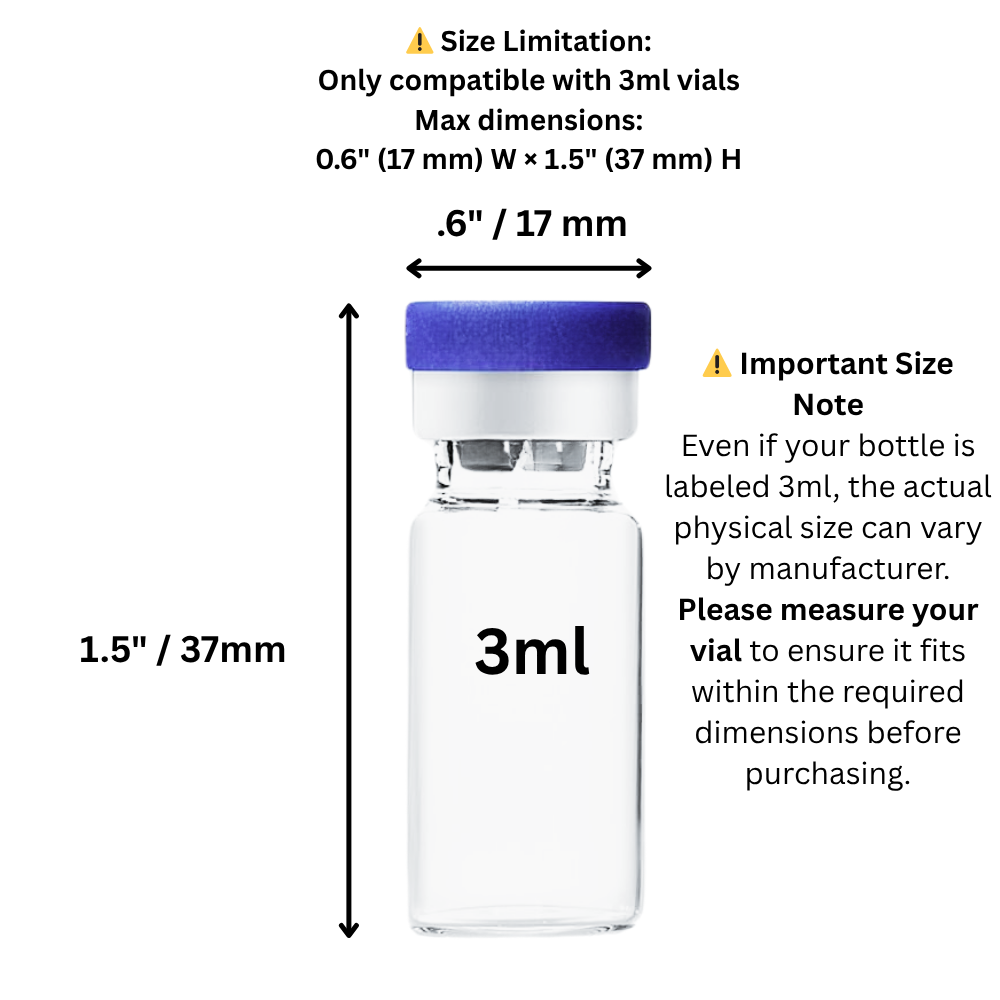
#1 — Best: VialCase Multi-Slot Peptide Case
VialCase’s multi-slot configurations are designed exactly for this scenario: multiple compounds, one organized case. Individual foam slots for each vial — labeled per compound — provide complete separation without any vial contact. The opaque hard shell handles light. Dedicated BAC water slot. Syringe compartment. The entire protocol in a single case that opens to give you immediate visual access to every compound and its reconstitution status.
For anyone running three or more compounds simultaneously, a single multi-slot VialCase is the most practical and organized solution available. Browse multi-slot cases at VialCase →
Pro Tip: Use a color-coded labeling system when running multiple peptides. One color of tape per compound. Blue for BPC-157, red for TB-500, green for sermorelin — whatever your system. Color coding lets you grab the correct vial in low-light conditions (fridge at 6am) without reading fine print on a label.
Organizing a Multi-Compound Protocol: The System That Works
Beyond the physical case, a protocol management system prevents errors. Keep the following for each active compound: compound name and source, concentration (mg/mL), reconstitution date, dose per injection, injection frequency, and total volume remaining. A small card or printed sheet inside the case takes 30 seconds to update after each dose and eliminates every common multi-peptide dosing error. See our full protocol organization guide for templates.
Frequently Asked Questions
Can I store different peptides in the same vial slot?
No. Each vial should have its own dedicated slot and clear labeling. Mixing compounds in shared slots creates identification errors that compound protocols can’t afford. Even if two vials look identical, they contain different compounds at different concentrations with different dosing schedules.
Do all peptides have the same storage requirements?
Most research peptides share the same core requirements: 2–8°C refrigeration, light protection, no freezing of reconstituted solution. Some compounds have specific variations — Epithalon, for instance, can be stored frozen as powder for long-term preservation. When running a mixed protocol, default to the most conservative requirements of any compound in your stack.
How many peptides can I store in one VialCase?
Depends on the configuration. VialCase offers layouts from 4 to 10+ vial slots. For most protocols — running 3–6 active compounds with one backup vial each — an 8-slot configuration handles the full stack with room to spare.