Why Hair Is the Ultimate Looksmaxing Priority
On Looksmax.org and across looksmaxing communities, hair consistently ranks as the #1 or #2 most impactful aesthetic factor — alongside jawline definition. The reasoning is simple:
- Hair frames the face. Thick, dense hair creates the frame that makes facial features look proportional. Thinning hair shifts proportions and ages the face by 5-10 years
- Hair loss is progressive. Unlike facial fat (which you can lose) or skin quality (which you can improve), hair loss compounds over time if untreated. Every month you wait, you lose ground that becomes harder to recover
- Hair responds to peptides. Unlike bone structure (mostly fixed after 25), hair follicles remain responsive to growth signals throughout life. Peptides can reactivate miniaturized follicles and extend growth phases
- First impression impact. Research consistently shows that a full head of hair is one of the strongest predictors of perceived youth and attractiveness — stronger than skin quality or body composition
The Hair Loss Timeline: By age 25, approximately 25% of men show signs of androgenetic alopecia (male pattern hair loss). By 35, it's 40%. By 50, it's 50%. The looksmaxing community treats hair loss like a fire — the earlier you address it, the more you save. Peptides are increasingly part of early-intervention protocols alongside finasteride and minoxidil.
Tier List: Peptides Ranked for Hair Growth
S-Tier: Strong Direct Evidence
- GHK-Cu (Copper Peptide) — The gold standard hair growth peptide. GHK-Cu has the most robust evidence for hair applications:
- Follicle enlargement: GHK-Cu increases hair follicle size, directly producing thicker individual strands. Larger follicles = thicker hair = more visual density
- Anagen extension: Extends the growth phase of the hair cycle, meaning each hair grows longer before entering the shedding phase. More hairs in growth phase at any given time = denser appearance
- Angiogenesis: Stimulates new blood vessel formation in the scalp, improving nutrient and oxygen delivery to follicles. Better-fed follicles produce better hair
- Anti-inflammatory: Reduces scalp inflammation that contributes to follicle miniaturization. DHT-induced inflammation is a primary driver of male pattern hair loss
- Gene expression: Upregulates genes associated with hair growth (Wnt signaling pathway) while downregulating genes linked to hair loss
A-Tier: Strong Supporting Evidence
- CJC-1295 + Ipamorelin (HGH Peptides) — Growth hormone has well-documented effects on hair:
- Stimulates hair follicle stem cells — IGF-1 (produced in response to HGH) activates dormant follicle stem cells
- Extends anagen phase — similar to GHK-Cu, elevated HGH keeps hairs in the growth phase longer
- Improves hair quality — hair becomes thicker, stronger, and more pigmented (some users report graying reversal)
- Takes 8-16 weeks for visible hair changes — hair grows ~0.5 inches per month, so peptide effects need months to manifest as visible length and density
- TB-500 (Thymosin Beta-4) — Originally a healing peptide, TB-500 has emerged as a hair growth compound:
- Promotes hair follicle migration and differentiation — stem cells in the follicle bulge are activated
- Anti-inflammatory effects reduce follicle-damaging scalp inflammation
- The looksmaxing community often stacks TB-500 with GHK-Cu for dual-mechanism hair support
- Both injectable and topical formulations are used for hair
B-Tier: Indirect Benefits
- BPC-157 — Primarily a healing peptide, but its angiogenic properties (new blood vessel formation) can improve scalp blood flow. Most useful as an adjunct in a hair stack, not as a standalone hair treatment. Also helps with gut healing, which supports nutrient absorption critical for hair growth
- Epithalon — Telomerase activator that may slow cellular aging in follicle stem cells. Theoretical long-term hair preservation, but no direct short-term growth evidence. More of a longevity play than an acute hair intervention
Overhyped for Hair
- MT2: Doesn't affect hair growth directly. May darken existing hair slightly through melanogenesis, but no follicle stimulation
- Retatrutide: Fat loss is great for your face, but GLP-1 peptides can actually cause hair shedding (telogen effluvium) during rapid weight loss. Temporary, but worth knowing
The Hair Growth Peptide Stack
The looksmaxing community has converged on specific combinations for maximum hair results:
The Standard Hair Stack
- GHK-Cu (injectable): Systemic benefits — skin, hair, collagen, healing. The foundation
- GHK-Cu (topical): Applied directly to scalp for targeted follicle stimulation. Many users run both injectable AND topical
- CJC-1295 + Ipamorelin: Elevated HGH for stem cell activation and growth phase extension
- Finasteride (oral): DHT blocker — stops the primary cause of follicle miniaturization. Not a peptide, but almost always stacked with them
- Minoxidil (topical): Vasodilator that increases scalp blood flow. Synergizes with GHK-Cu's angiogenic effects
The Advanced Hair Stack
- Everything in the standard stack, plus:
- TB-500: Additional stem cell activation and anti-inflammatory support
- Microneedling (weekly): Creates controlled scalp micro-injuries that trigger wound healing response. GHK-Cu and BPC-157 accelerate the healing and collagen remodeling
- Ketoconazole shampoo: Anti-fungal with anti-DHT properties at the scalp level
Injectable vs. Topical GHK-Cu for Hair: Injectable GHK-Cu provides systemic benefits — your skin, joints, and hair all improve. Topical GHK-Cu delivers a higher concentration directly to scalp follicles. The looksmaxing consensus: run both if hair is your priority. Injectable in the morning (with the rest of your daily protocol), topical applied to the scalp before bed. Keep the injectable vial in your storage case; the topical can go in the fridge door.
How Peptides Compare to Traditional Hair Loss Treatments
| Treatment | Mechanism | Timeline | Best For |
|---|---|---|---|
| Finasteride | Blocks DHT production | 3-6 months | Stopping further loss |
| Minoxidil | Scalp vasodilation | 2-4 months | Regrowing thinning areas |
| GHK-Cu | Follicle enlargement, angiogenesis | 6-12 weeks | Thickening + density |
| CJC/Ipa | HGH → stem cell activation | 8-16 weeks | Overall hair quality |
| TB-500 | Stem cell migration, anti-inflammation | 8-12 weeks | Follicle reactivation |
The key insight: these treatments work through different mechanisms, which is why stacking produces better results than any single approach. Finasteride stops the damage, minoxidil increases blood flow, GHK-Cu enlarges follicles, and HGH peptides activate stem cells. They're complementary, not redundant.
Hair Growth Results Timeline
- Week 1-4: No visible hair changes. Peptides are working at the follicle level — stem cells activating, blood vessel formation beginning, inflammatory markers dropping. Hair growth is slow (~1cm/month), so patience is required
- Week 4-8: Existing hair may feel thicker at the root. Less hair in the shower drain (reduced shedding). Some users notice baby hairs appearing at the hairline or temples — these are miniaturized follicles reactivating
- Week 8-12: Visible density improvement, especially in thinning areas. Hair strands are measurably thicker. Growth rate may increase slightly. This is when before/after photos start showing differences
- Week 12-24: Full results compound. New growth has had time to reach visible length. Density continues improving as more follicles enter anagen phase. The hairline may show regrowth in areas that were thinning but not yet bald
Realistic Expectations: Peptides can thicken existing hair, reactivate miniaturized follicles, and slow loss. They cannot resurrect completely dead follicles (shiny, smooth scalp with no vellus hair). The earlier you start, the more follicles are still viable. If you're in the early stages of thinning — that's the ideal time for peptide intervention.
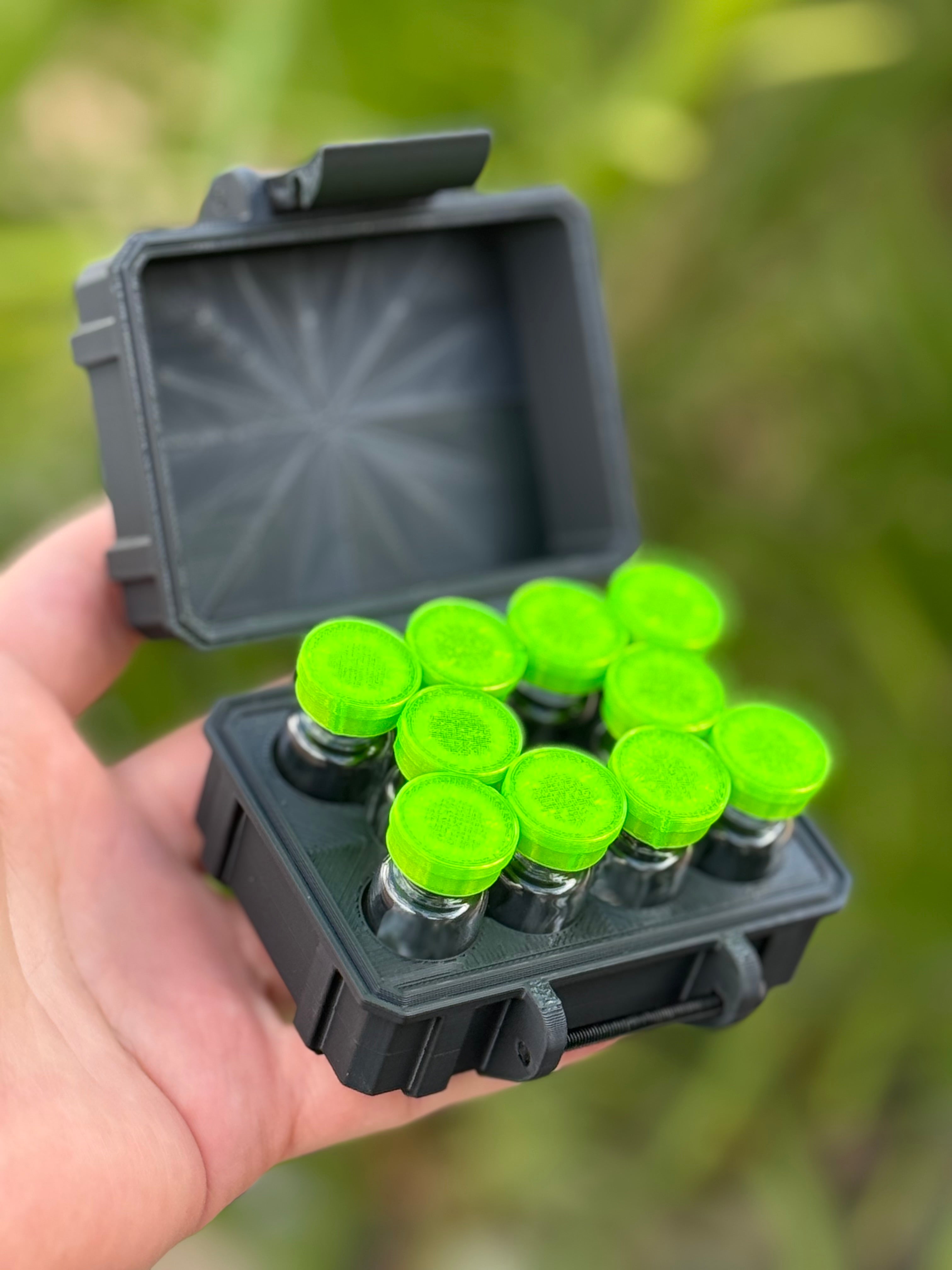
Why Hair Peptide Storage Is Critical
Hair growth protocols are long-term commitments — 3-6 months minimum for meaningful results. This creates unique storage challenges:
- Extended vial life needed: You're buying and storing vials for months. Lyophilized stock needs proper freezer storage (-20°C) between reconstitutions
- GHK-Cu's copper sensitivity: The copper ion in GHK-Cu is uniquely vulnerable to light-driven oxidation. You can see degradation — if the characteristic blue tint fades, the copper complex has broken down and the hair growth activity is compromised
- Multi-vial management: A hair stack (GHK-Cu + CJC + Ipa + TB-500) means 3-4 active vials plus reserve stock. Organization prevents confusion between compounds
- Consistency over months: Hair growth requires uninterrupted peptide exposure. Running out because a vial degraded early, or injecting degraded compound without realizing, creates gaps that set back your timeline
GHK-Cu Hair Storage Specifics
Since GHK-Cu is the cornerstone of any peptide hair stack, its storage deserves special attention:
- Reconstituted shelf life: 3-4 weeks with BAC water — shorter than most peptides due to copper oxidation
- Visual freshness check: Look for the blue/blue-green tint before every use. If the color has faded, the copper-peptide complex has dissociated. Replace the vial
- 100% light blocking: Amber vials are not enough — they still transmit visible wavelengths that drive copper oxidation. Only fully opaque storage works
- Swirl, never shake: Vigorous mixing introduces oxygen bubbles that accelerate copper oxidation. Gentle swirling is sufficient
- Minimize headspace air: Don't inject excess air when drawing. The oxygen in the vial headspace is the second biggest degradation factor after light
Bottom Line: Hair is the looksmaxing priority that takes the longest to improve — and the one where consistent, potent peptide exposure matters most. GHK-Cu is the #1 hair growth peptide, but its copper ion makes it the most storage-sensitive compound in your stack. Every day your GHK-Cu sits unprotected in a lit fridge, your hair growth potential diminishes. A proper storage case isn't just protecting your peptides — it's protecting months of hair growth progress.
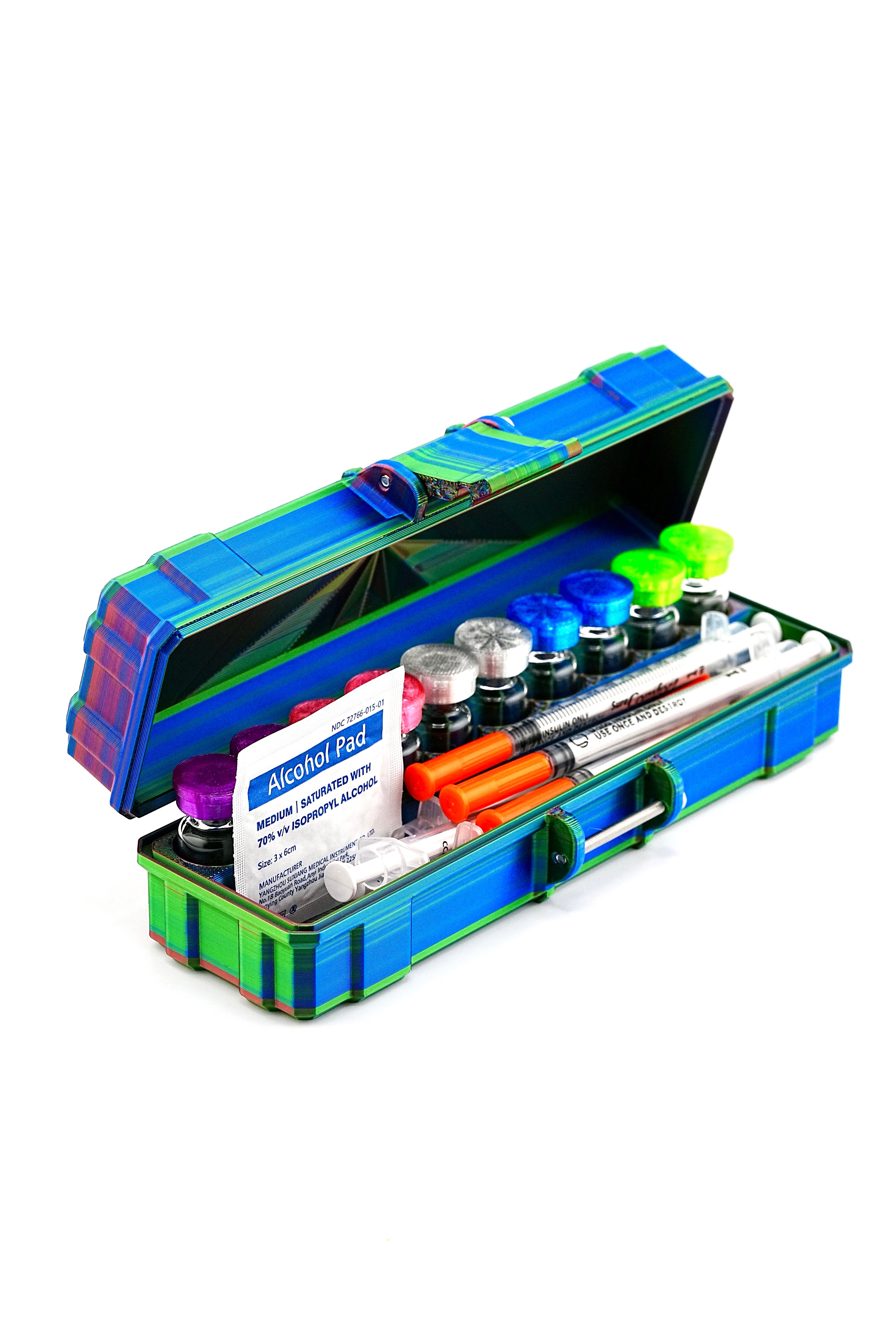
"Running GHK-Cu for hair and the copper oxidation is real. The case keeps it blue and potent way longer than foil ever did."
— Kevin H., Verified Buyer
Shop PeptideCase →Disclaimer: This content is for informational and educational purposes only. It is not medical advice and does not constitute a doctor-patient relationship. Peptides discussed are research compounds — consult a licensed healthcare provider before use. PeptideCase sells storage products only and does not sell, manufacture, or distribute peptides or pharmaceuticals.